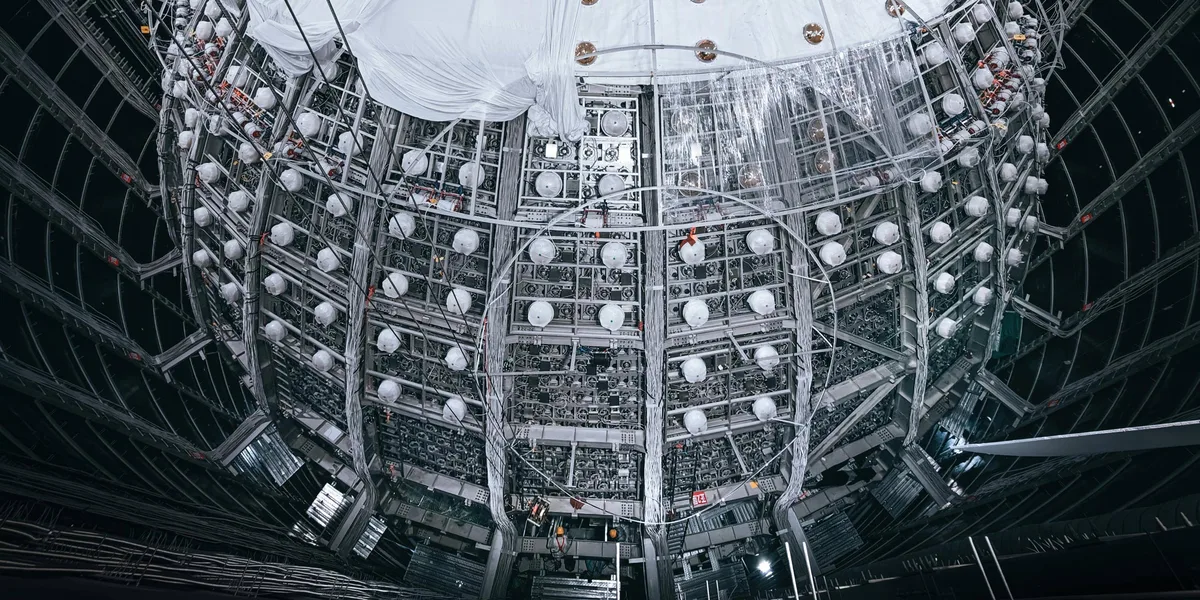
China is building the Shanghai High Repetition Rate XFEL and Extreme Light Facility (SHINE), its first hard X-ray free-electron laser. The facility sits about 30 meters underground near Shanghai and features an accelerator tunnel more than three kilometers long [1].
The construction requires extremely precise engineering. Tunnel segments must be aligned within millimeters while accounting for the Earth’s curvature and vibrations from nearby maglev trains. "Building an ordinary tunnel, you can advance hundreds of segments a day. Here we manage about eight," said Li Xinsheng, a senior engineer on SHINE [1].
SHINE is co-operated by the Center for Transformative Science at ShanghaiTech University and the Chinese Academy of Sciences [1].
China’s overall investment in scientific fixed assets, including labs and equipment, has more than tripled between 2015 and 2024. This growth has outpaced that of traditional infrastructure, which rose by less than 80 percent over the same period [1]. Over 90 megascience facilities have been built or are planned across the country, covering neutrino detectors, fusion reactors, and radio telescopes. These form a growing network of scientific infrastructure [1].
Liu Zhi, vice president of ShanghaiTech University and director of the Center for Transformative Science, said, "As China’s economic capacity has grown, the country has increasingly invested in the tools needed to explore those questions directly" [1].
Previously focused mainly on frontier scientific theory, China is now emphasizing large instruments and research tools to match its expanding economy [1].
The SHINE project is progressing steadily, with engineers fitting about eight tunnel segments daily to ensure the exacting construction standards are met [1].