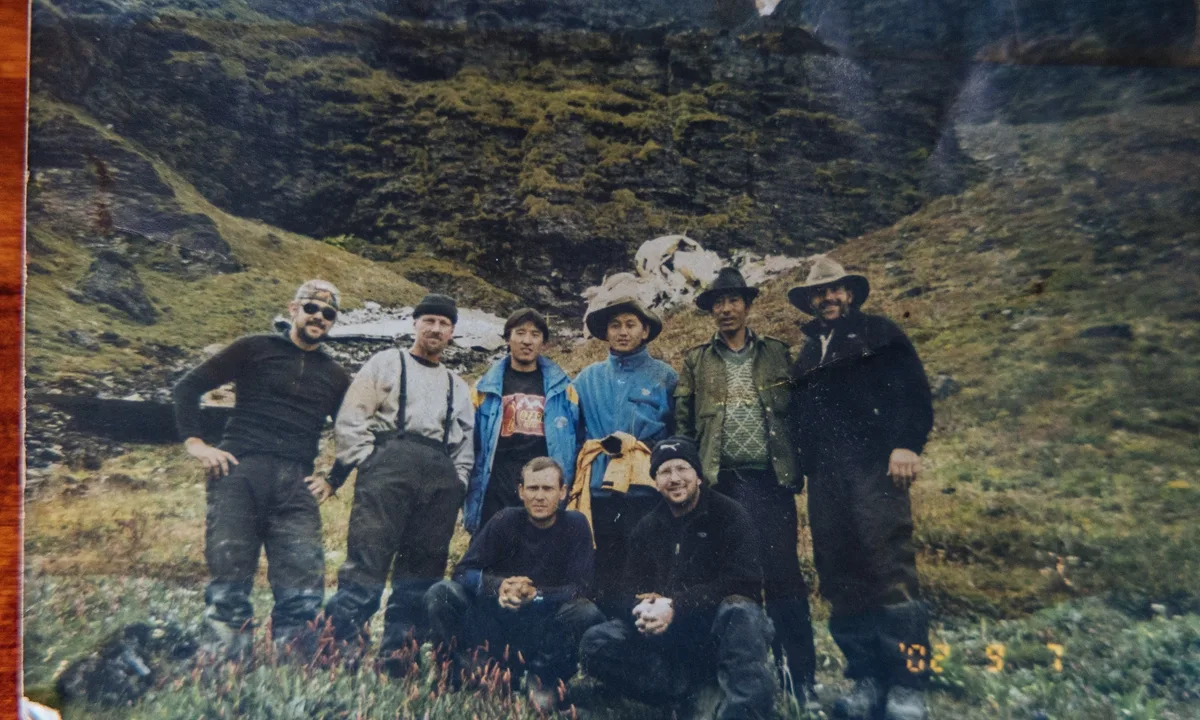
A joint Chinese and American expedition discovered the wreckage of a World War II transport aircraft in late summer 2002 near Langgong village in Mainling county, Nyingchi, Xizang, China. The aircraft crashed in 1941 during a supply mission over the perilous Hump Route, a critical WWII air supply corridor that connected China with Allied forces across the Himalayas [1].
The plane and its crew lay hidden for decades in a remote valley known as Nailung Gully, close to the village. The site is near Namcha Barwa peak, which rises to 7,782 meters in altitude [1]. Langgong village itself is small and isolated, with just over a dozen households. Historically, it has been cut off from major roads and external contact, emphasizing the challenging terrain where the crash occurred [1].
The Hump Route was renowned for its danger, navigating treacherous mountain weather and geography. It played a vital role in sustaining China’s war effort against Japanese forces by delivering supplies from Allied bases across the Himalayas [1]. The discovery sheds light on this chapter of WWII history by confirming the location of a long-lost American transport aircraft lost in the conflict.
This report accompanies a 2025 themed series by the Global Times commemorating the 80th anniversary of the 1945 victory that ended the Chinese People’s War of Resistance against Japanese Aggression and the World Anti-Fascist War [1].
Researchers and historians may now have the opportunity to study the crash site and glean further insights about the mission, the aircraft, and the crew. The discovery also honors those who flew hazardous routes to support the war effort.
The next step will be detailed archaeological and archival work to document the wreckage and recover any artifacts. Further cooperation between Chinese and American experts is expected to explore and preserve this historic site.