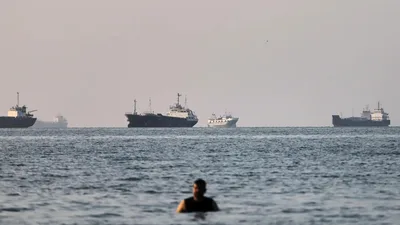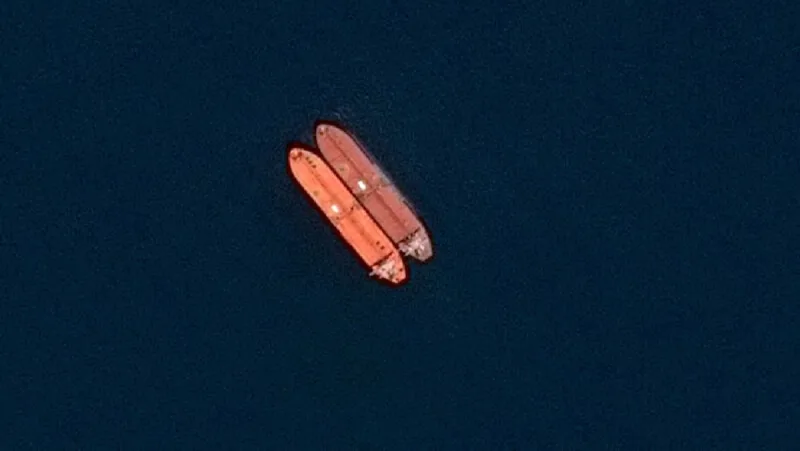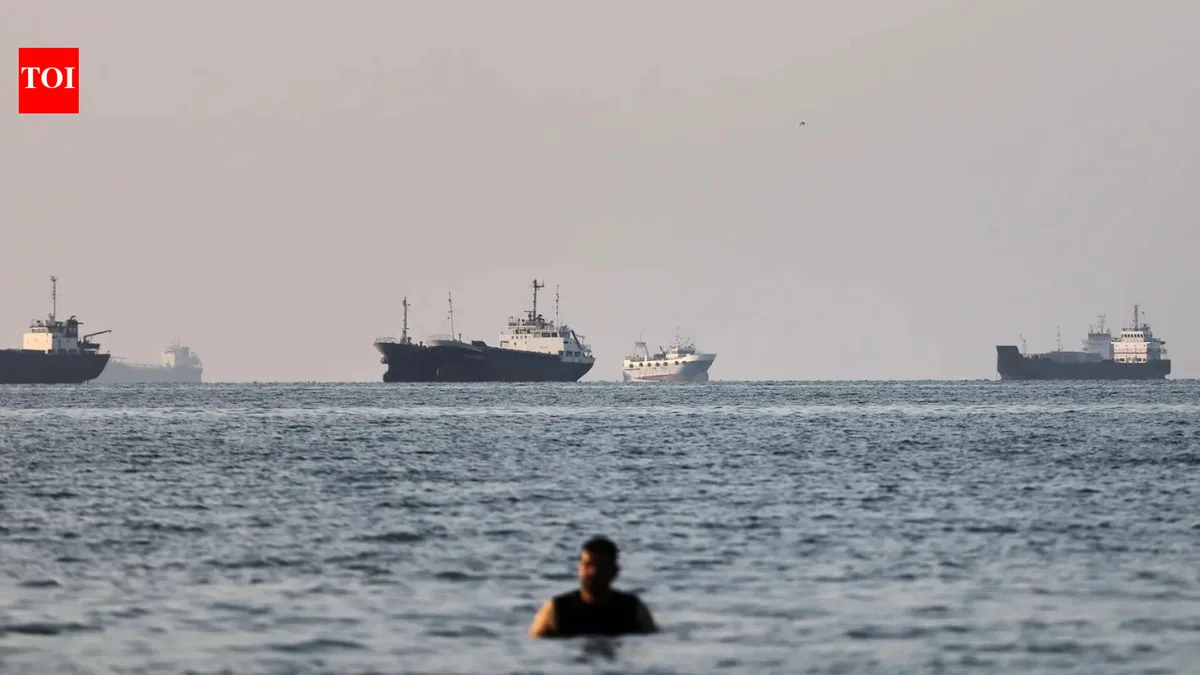
Since early May 2026, the US military has been conducting a covert large-scale ship-to-ship oil transfer operation near the Strait of Hormuz to maintain Gulf energy exports despite Iranian threats [1, 2, 3, 4, 5, 6, 7]. The operation uses tactics long associated with Iran’s sanctioned "dark fleet," involving vessels with their AIS transponders off and lights dimmed, moving oil at night between smaller ships in offshore UAE (Fujairah) and Oman (Sohar) waters before loading onto very large crude carriers (VLCCs) [1, 2, 3, 4, 5, 6, 7].
At least 116 ships have participated up to mid-June, transferring an estimated total of about 90 million barrels of crude [1, 2, 3, 4, 5, 6, 7]. On the peak day of June 11, 17 pairs of ships simultaneously carried out transfers at both Fujairah and Sohar locations [1, 4, 5]. The vessels keep a distance of 3,000 to 4,000 meters and operate with lights off to evade detection [3, 4, 5].
The covert oil transfers respond to Iran's blockade efforts, allowing Gulf exports to continue under high risk of Iranian attacks [1, 2, 3, 4, 5, 6, 7]. Michael Froman, president of the Council on Foreign Relations, said, "As the old rules weaken, it's ironic that the United States is now taking a page out of the playbook of China, Russia, North Korea, and even Iran, whose so-called 'dark fleets' pioneered these techniques precisely to evade U.S. and UN sanctions" [2]. Noam Raydan, senior fellow at the Washington Institute, warned that "You just don't know when Iran might just decide to start using drones or even gunboats in order to prevent even those ships from transiting the strait" [2].
On June 9, an AH-64 Apache attack helicopter supporting the covert operation with electronic escort and low-altitude coverage near Sohar, Oman, was shot down by Iran [1, 4, 5, 6, 7]. The two crew members were rescued by US drone vessels [1, 4, 5, 6, 7]. A US military official stated, "CENTCOM forces are not involved in any ship-to-ship oil transfer operations. The two crew members were rescued by a drone vessel" [1].
US Central Command publicly denies direct military involvement in the oil transfers themselves but confirms the helicopter rescue [1, 4, 5]. The operation is reportedly directed by the White House National Security Council and executed under Central Command authority [6, 7].
Iran has not officially commented on the US covert oil transfer operations [1, 4, 5]. On June 15, US President Trump announced a peace framework agreement with Iran expected to reopen the Strait of Hormuz on June 19, but details remain unclear, and its effect on the ongoing covert transfers is uncertain [1, 4, 5].