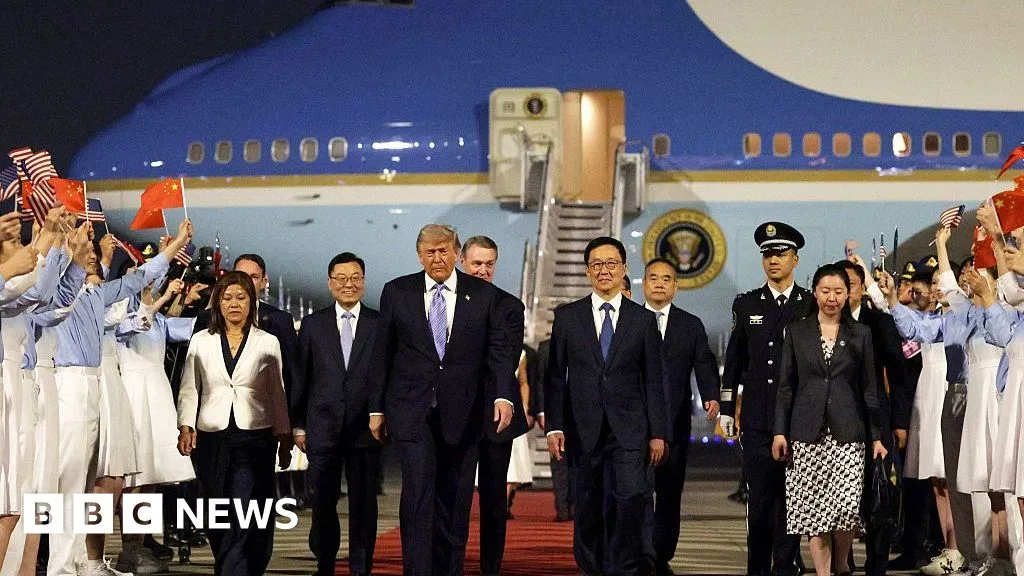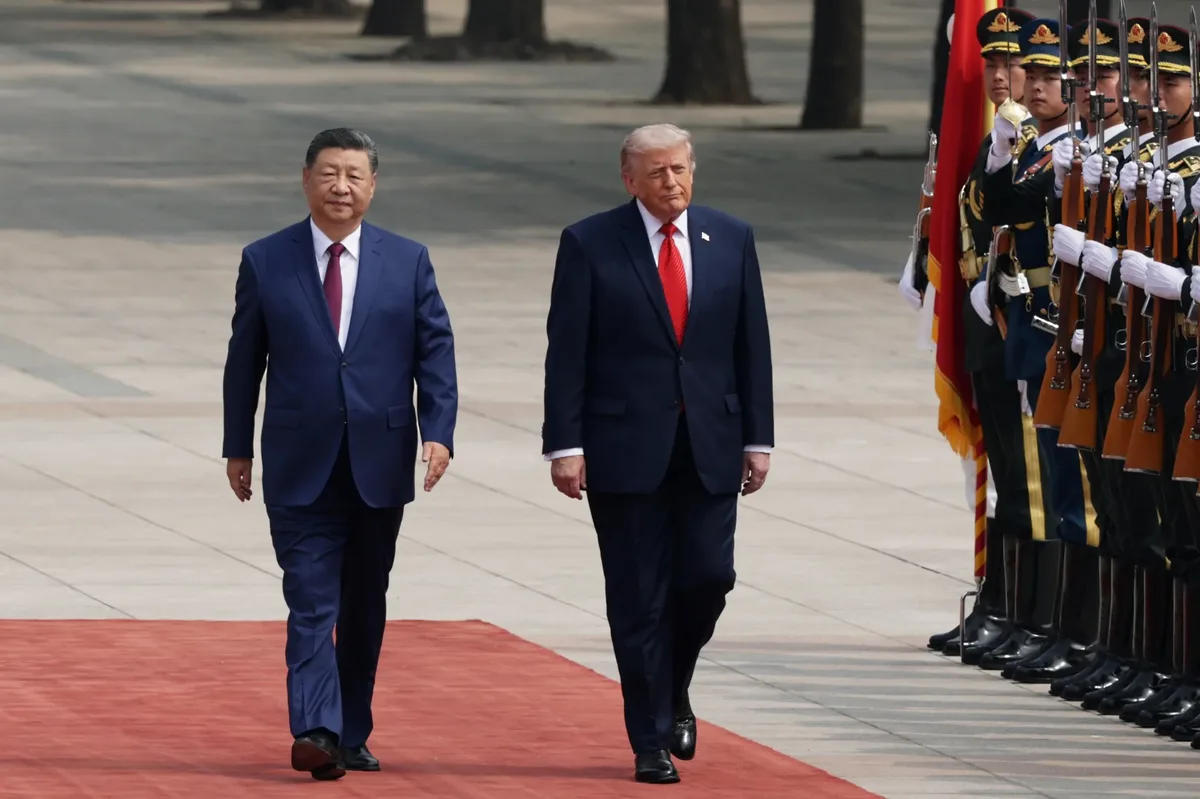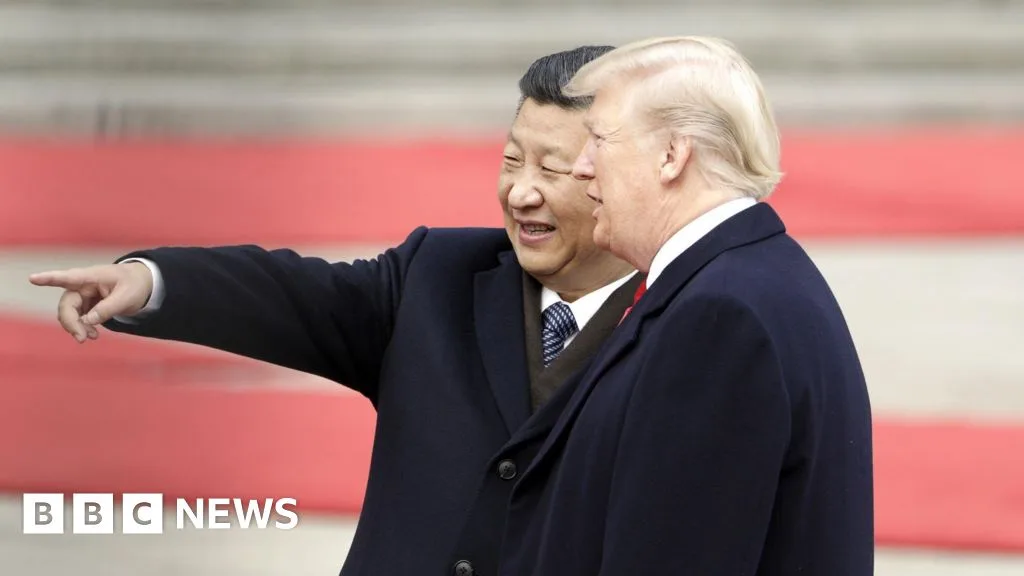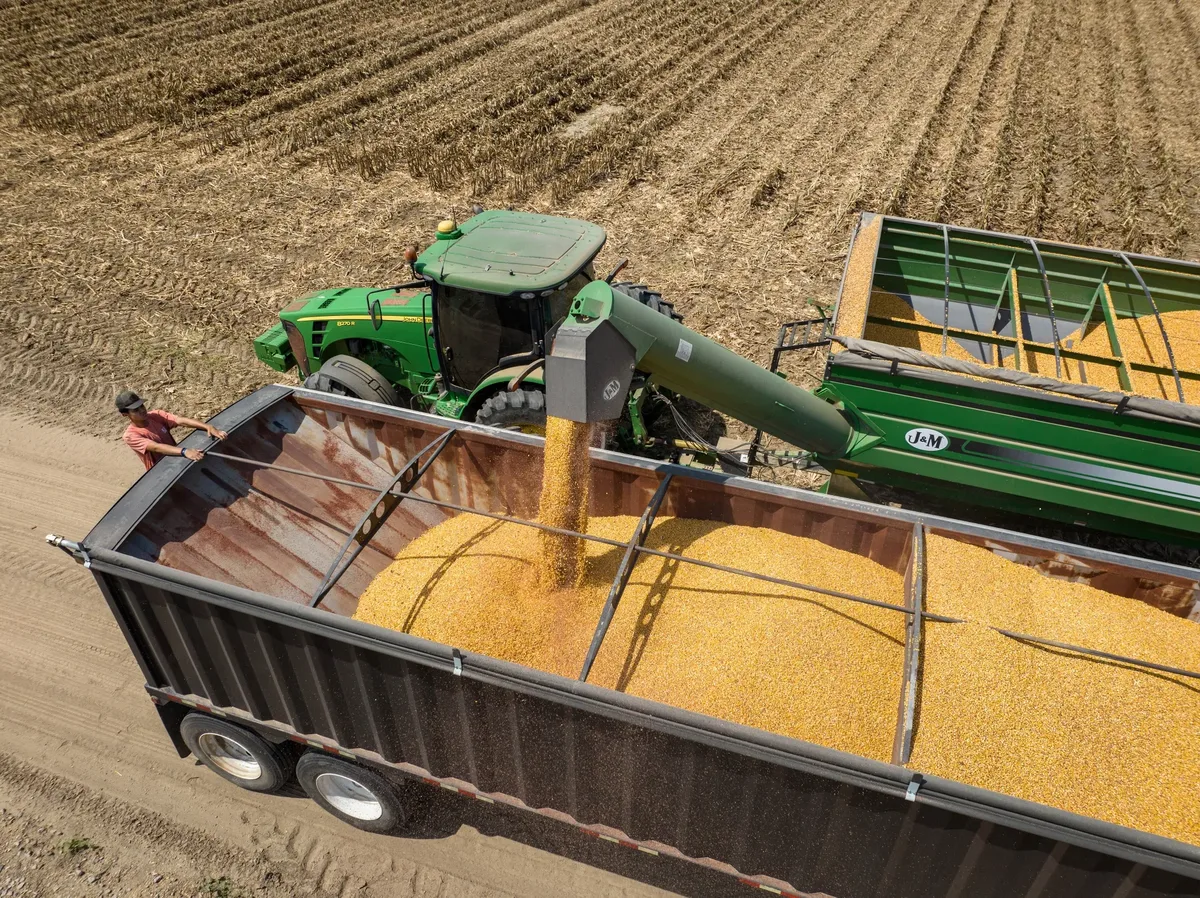
US President Donald Trump visited Beijing from May 13 to 15, 2026, for a summit with Chinese President Xi Jinping, the first by a US president since 2017 [1, 2, 3]. The agenda covered trade negotiations emphasizing American agricultural exports like corn and soybeans, tariffs, technology cooperation, Taiwan security, and the ongoing war in Iran [4, 5, 1, 2, 3]. China considered purchasing US crops including corn, sorghum, distillers dried grains, and soybeans during the talks [4, 5].
A key topic was the war in Iran and its effect on oil flows through the Strait of Hormuz. China, a major buyer of Iranian oil, faced US pressure to help reopen the strait amidst regional conflict [1, 6, 3]. Since February 2025, China has imposed tariffs of 15% on US liquefied natural gas and 10% on crude oil imports, halting those energy shipments amid trade tensions [6].
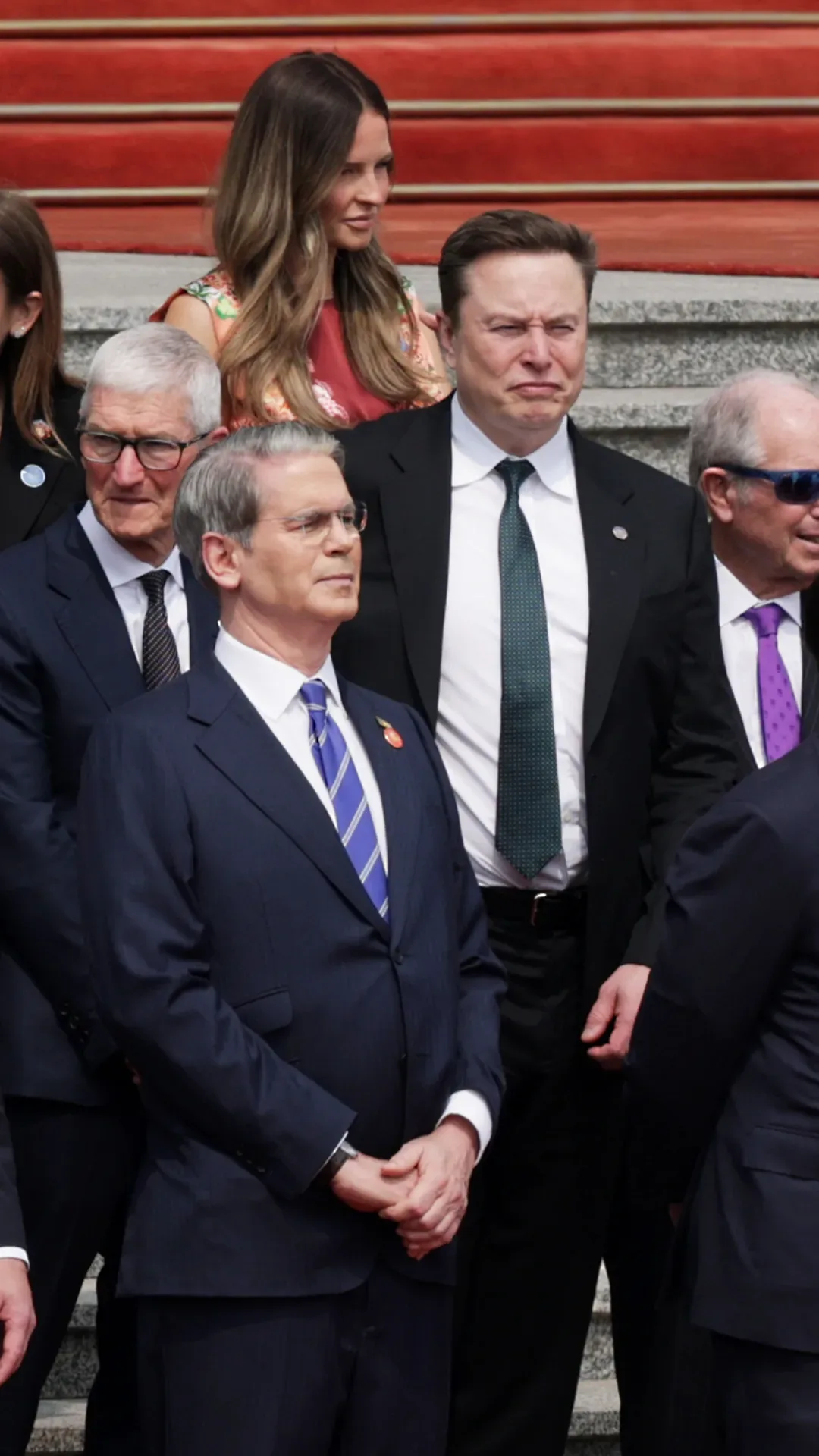
The US delegation included prominent business leaders from tech, finance, aviation, and social media sectors, such as Tesla and SpaceX CEO Elon Musk, Apple’s Tim Cook, and BlackRock’s Larry Fink [7, 8, 2, 9]. Nvidia CEO Jensen Huang, despite his ties to Trump and semiconductors, did not attend [8, 9].
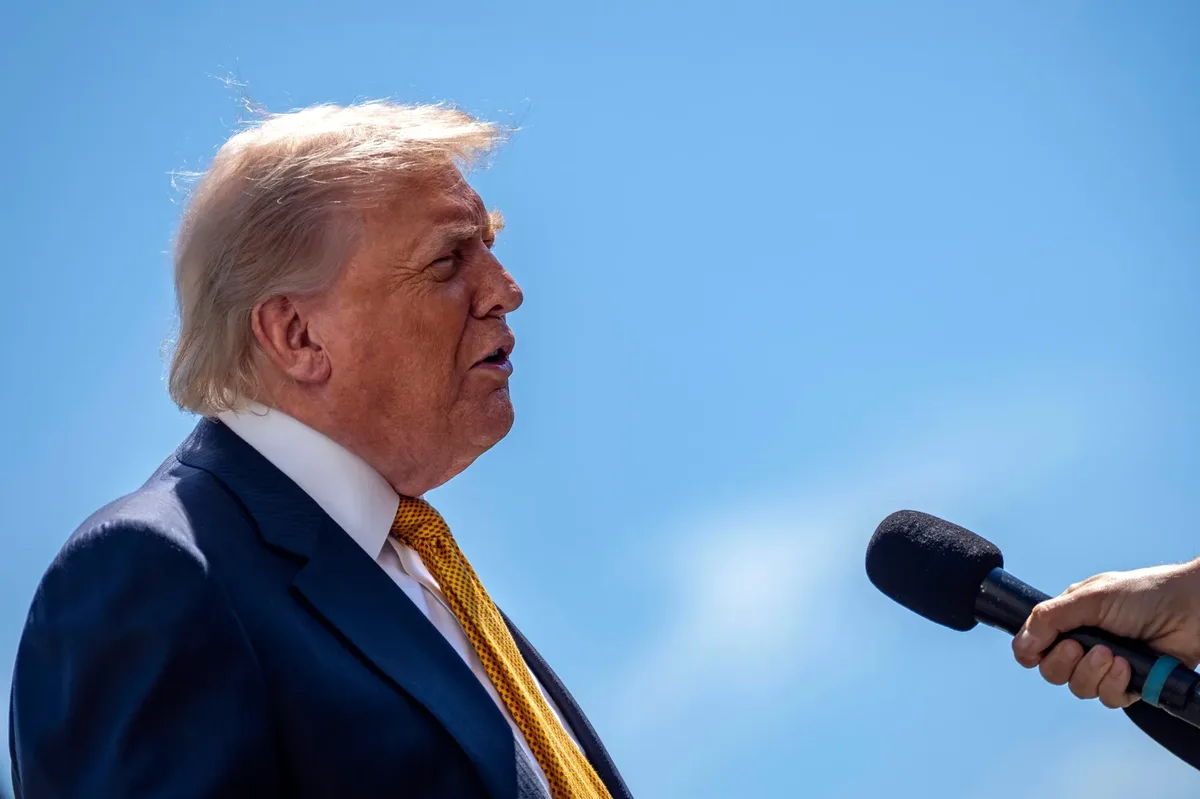
Taiwan remained a sensitive issue. Trump confirmed he would discuss US arms sales to Taiwan with Xi and expressed confidence his personal relationship with Xi would prevent Chinese military aggression [2, 10]. Trump said, "I’m going to have that discussion with President Xi [about arms sales to Taiwan]. President Xi would like us not to, and I’ll have that discussion" [2]. China opposes Taiwan independence as a core interest and views US policies as encouraging separatism, raising risks of miscalculation [10].
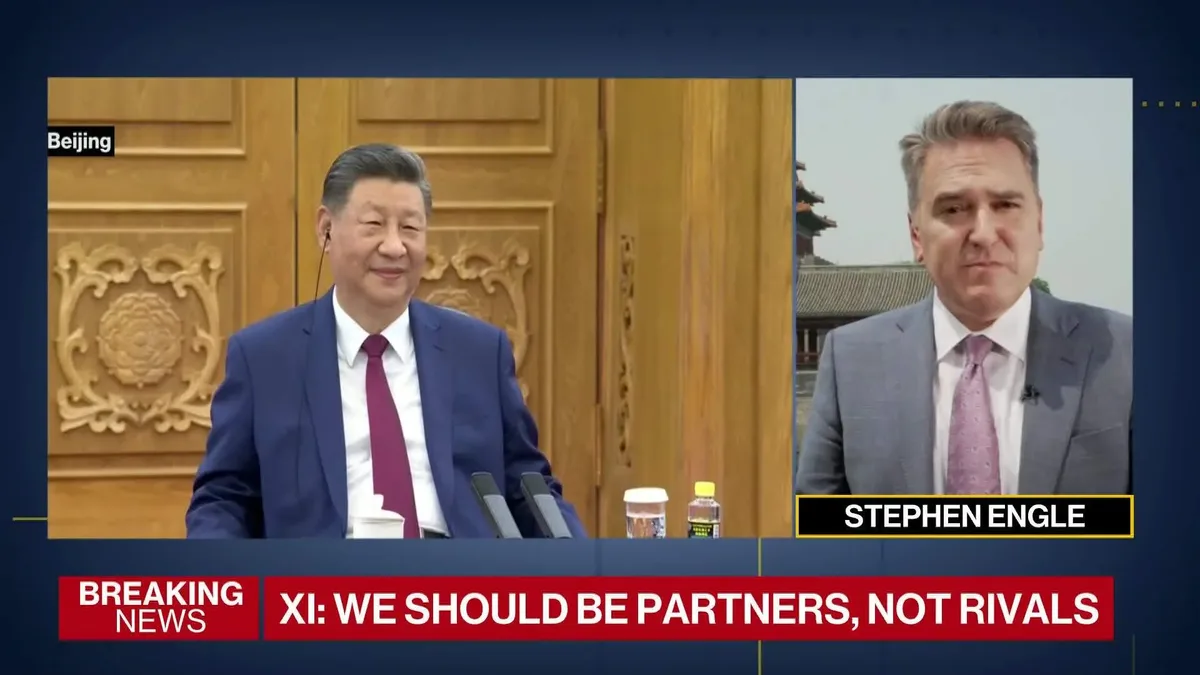
The summit began May 14 with both leaders adopting an optimistic tone toward collaboration on trade, Taiwan, and Iran [11]. Analysts stressed that China’s heavy investments in renewable energy, robotics, and AI over the past decade position it as a near-peer competitor to the US. Ali Wyne of the International Crisis Group said, "Washington now acknowledges China as a 'near-peer'. Beijing is arguably the most powerful competitor that the United States has confronted in its history." [12]. Meanwhile, Eurasia Group’s Jeremy Chan noted Xi entered the summit confident, saying "Xi is coming into the summit feeling confident he has solved Trump. Trump needs more from this summit than Xi does. And Xi knows it." [3]
Trump also aimed to secure headline-grabbing trade deals, including Boeing plane sales and expanded Chinese purchases of US agricultural goods [5, 1]. The visit had been delayed from March 2026 due to conflict in Iran involving the US and Israel [1].
Taiwan’s parliament approved a $25 billion defense spending bill on May 8 amid rising tensions, and US senators urged Trump to approve a $14 billion arms package for Taiwan ahead of the summit [2].
Trump arrived in Beijing May 13, welcomed by senior Chinese officials and business leaders. The reception included meetings at symbolic venues like Zhongnanhai [12, 1].
Next steps include ongoing negotiations on trade deals and security issues following the summit’s conclusion on May 15, as both sides weigh progress on tariffs, technology cooperation, and regional security concerns.