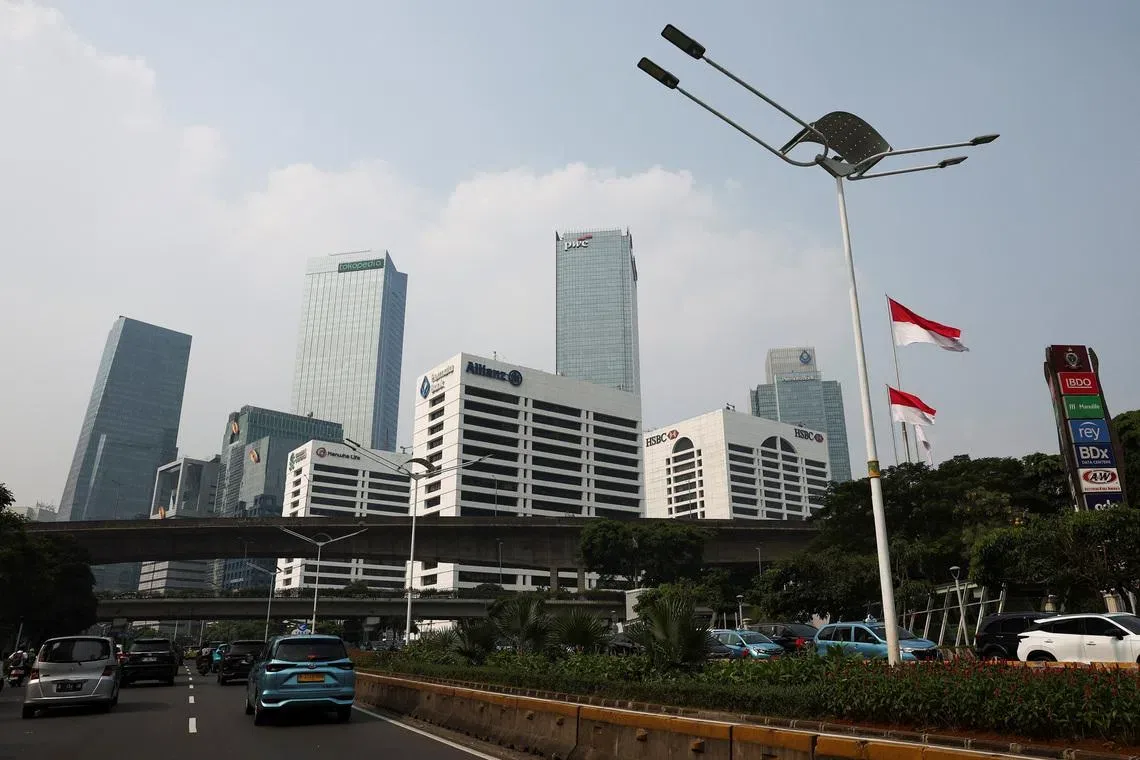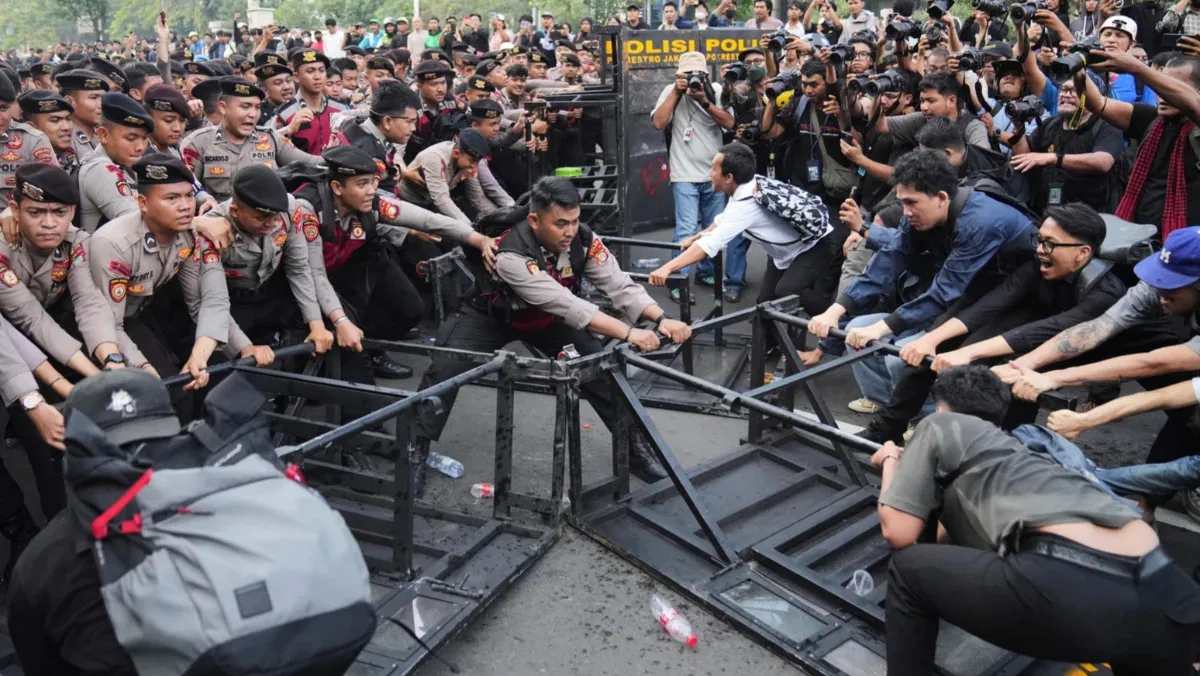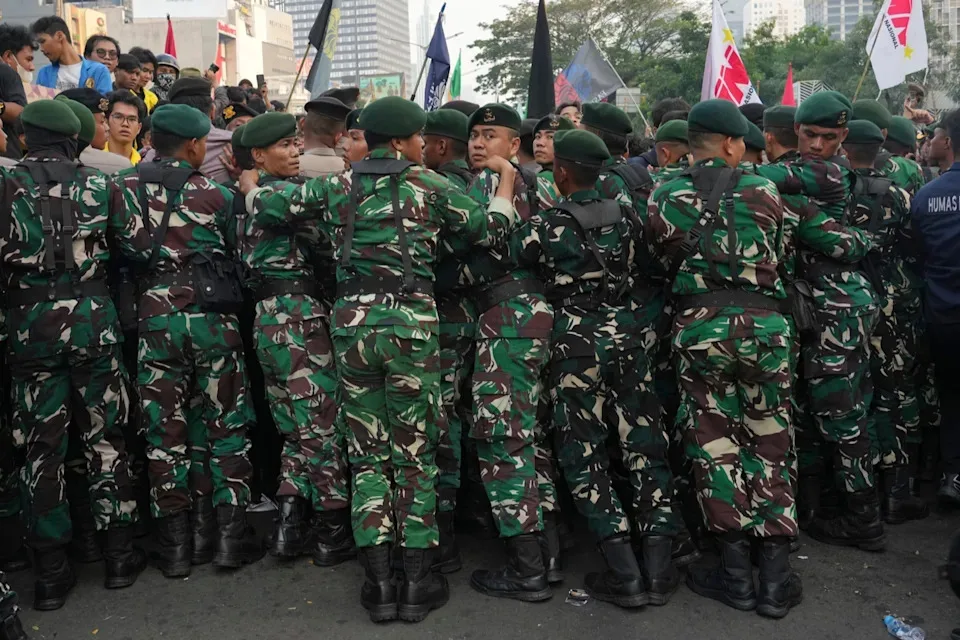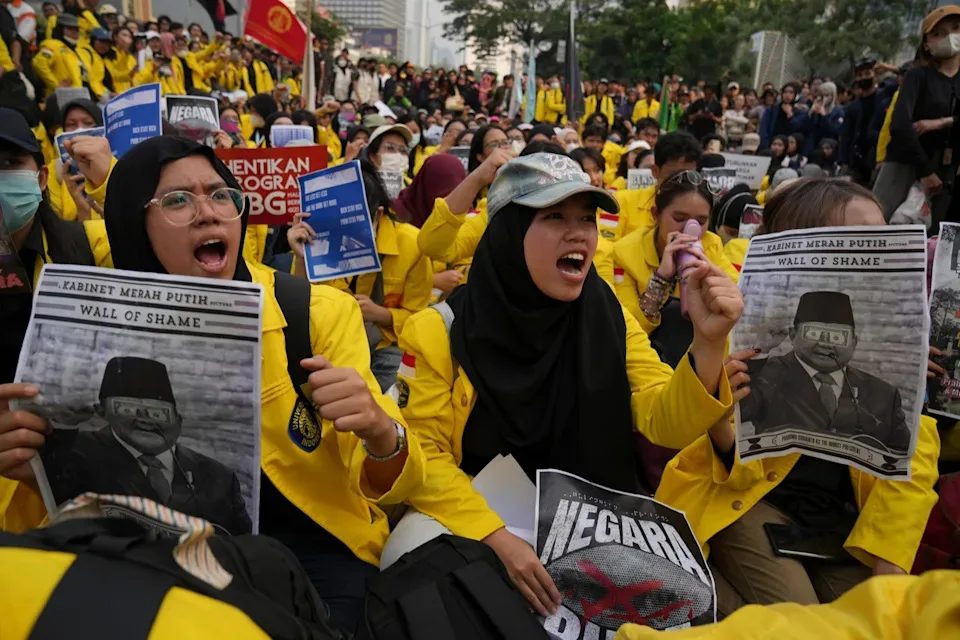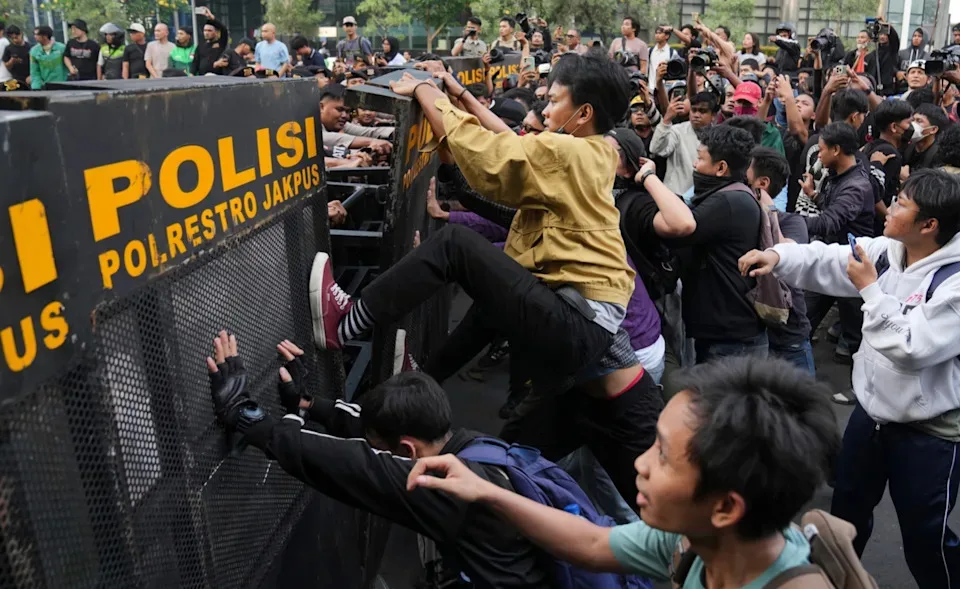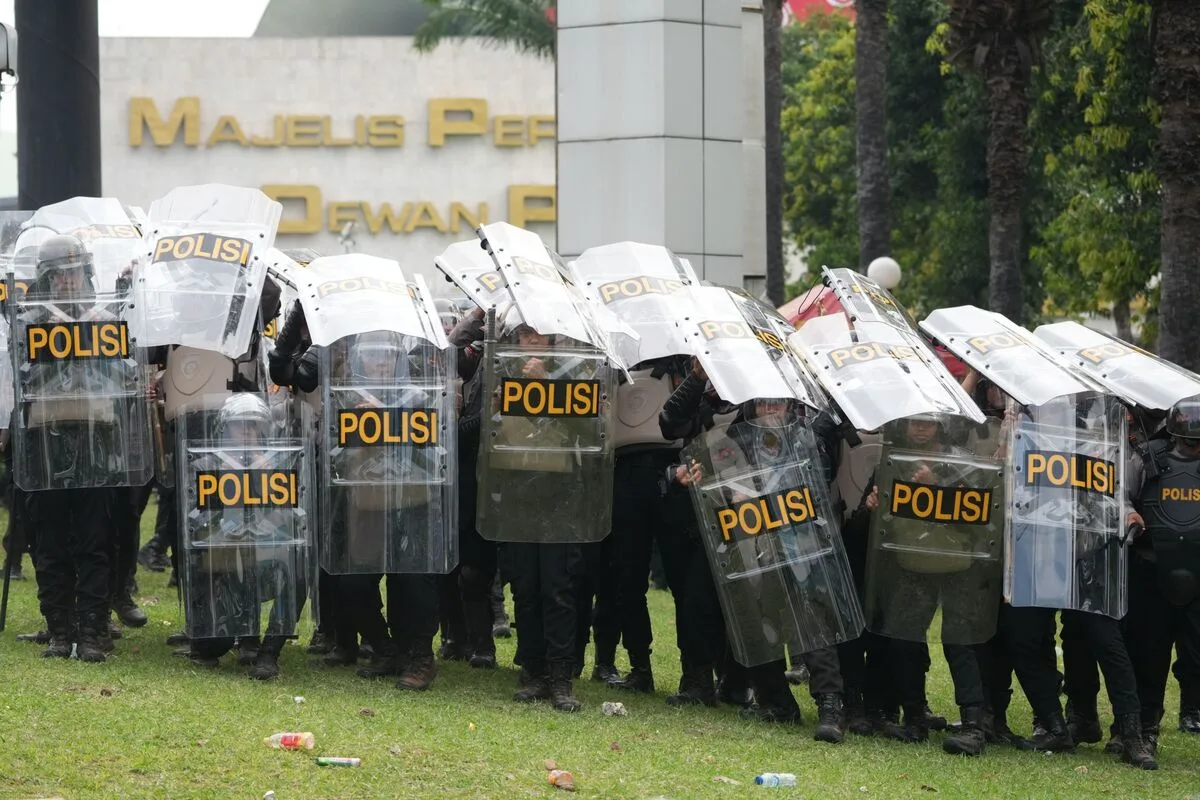
Indonesian authorities deployed approximately 4,151 joint security personnel, including 500 soldiers, to manage student protests planned for June 12 in Jakarta [1, 2, 3]. Several thousand students from multiple universities in Greater Jakarta gathered around Plaza Indonesia and Bundaran HI to protest rising living costs, high fuel prices, government waste, and economic mismanagement [1, 2, 4, 5, 6].
Organized under banners like "Indonesia Heading Toward Bankruptcy," protesters demanded the government stop costly free nutritious meal programs, which have been linked to food poisoning incidents in children, and called for cuts to fuel and food prices [4, 5, 6]. Student leader Yatalathof Ma'shum Imawan said, "We want to show the situation is very bad. We do not want Indonesia to go bankrupt, but these actions prove Indonesia will become bankrupt economically, democratically and morally" [6].
The protests included clashes between students and security forces, with police blocking access near the State Palace and Bundaran HI to contain crowds [4, 5, 6]. The government urged protesters to remain peaceful and avoid vandalism or carrying weapons ahead of the demonstrations [1, 2, 4]. Authorities warned that road closures and traffic diversions could be enforced depending on crowd size [1, 2, 3].
The demonstrations underscore widespread public dissatisfaction with President Prabowo Subianto's government amid a harsh economic environment. Inflation reached 3.08% year-on-year in May 2026, while the rupiah weakened below 18,000 IDR per U.S. dollar, hitting historic lows [5, 6]. The Jakarta Composite Index has fallen about one-third this year [5, 6].
Students called for greater government accountability, an end to wasteful spending, reduced military involvement in civilian matters, and protection of Bank Indonesia’s independence [2, 6]. Muhammad Nur Asla Junior, a 20-year-old student, said, "I think the government just does not have the courage to admit we are in trouble. Just admit there is a crisis, admit the country is facing difficulties, and propose real policies to help the people and improve the situation" [5].
The protests follow earlier unrest: in 2024, mass protests led Parliament to scrap planned election law revisions, and in 2025 violent livelihood protests forced Prabowo to fire his finance minister [2, 3]. Wana Alamsyah of Indonesia Corruption Watch said the 2025 protests began over perceived inequality and officials prioritizing fuel price hikes over cutting their wages [2].
Some student leaders warned the June 12 protests were just the beginning. Yatalathof Ma'shum Imawan said, "This is not the end. This is only the first step. Let's conserve our energy for what comes next" [4]. Despite the protests, civil society and labor groups were not expected to join heavily [2, 3].