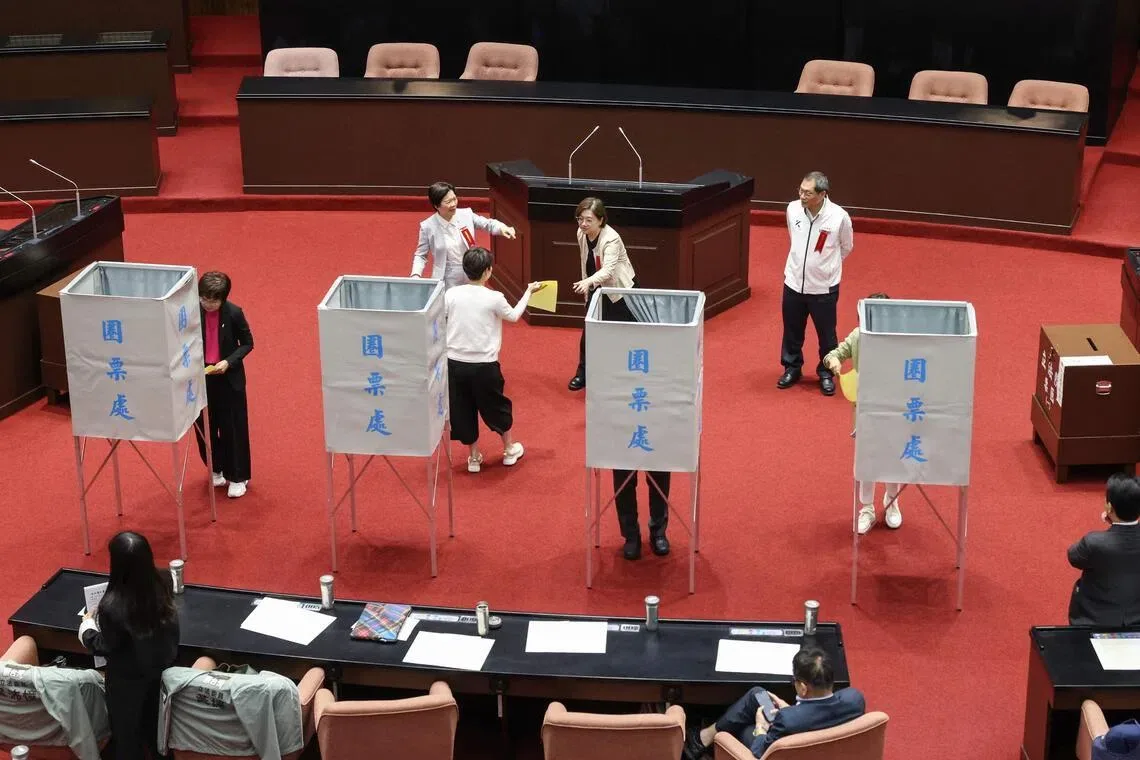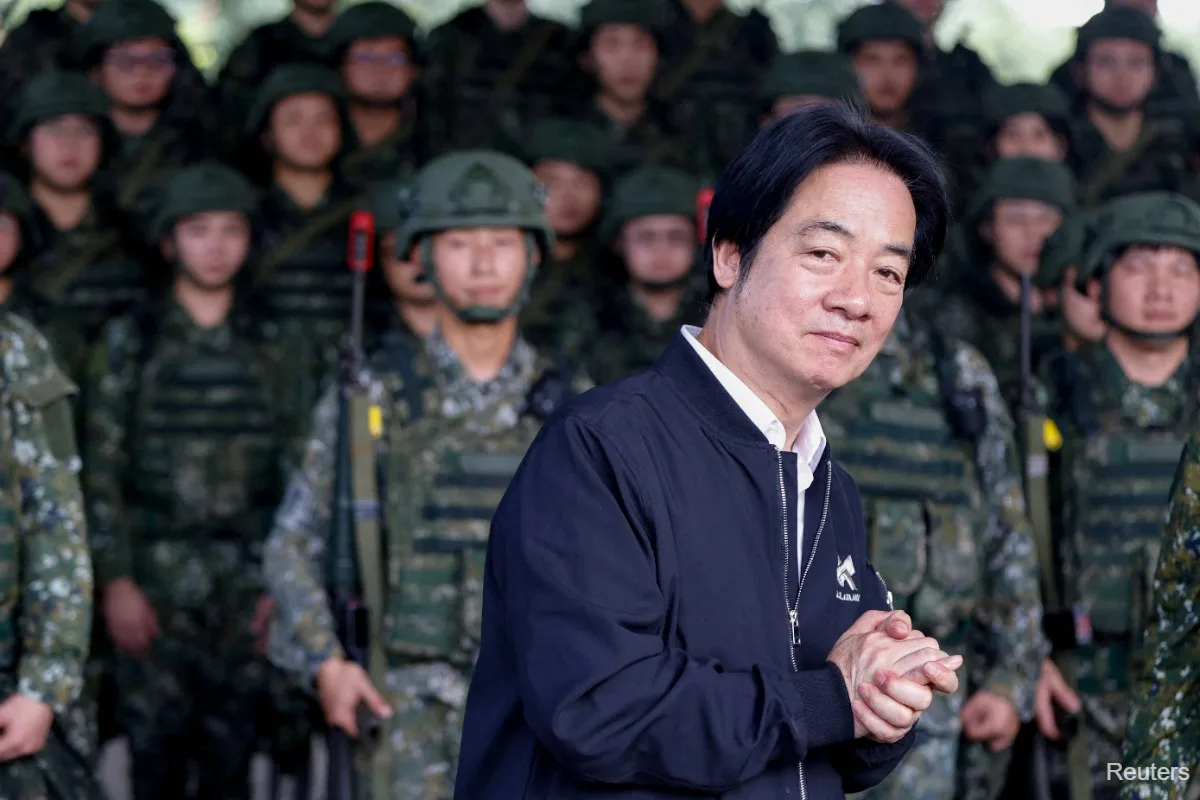
Taiwan's opposition parties failed to impeach President Lai Ching-te on May 19, 2026, after the vote in the 113-seat Parliament fell below the required two-thirds majority. The tally was 56 in favour and 50 against, short of the 76 votes needed to pass the motion [1, 2].
The impeachment effort came after Lai and his premier refused to sign a revenue-sharing bill passed by Parliament. The opposition Kuomintang (KMT) and Taiwan People's Party (TPP), who control the legislature, launched the proceedings amid ongoing bitter conflict with Lai's Democratic Progressive Party (DPP) since Lai took office in May 2024 [1, 2].
Opposition lawmakers called Lai "dictatorial," while DPP lawmaker Wu Szu-yao accused the KMT and TPP of "coordinating with external hostile forces to manipulate Taiwan's political struggles" [1, 2]. Wu made the allegation on May 18, shortly before the impeachment vote [1, 2].
Both sides accuse each other of violating the constitution. Premier Cho Jung-tai said he would "continue to push for reconciliation and coexistence" with the opposition after the impeachment defeat [1, 2].
A key point of dispute remains defense spending amid ongoing tensions with China, which claims Taiwan as its territory and has threatened forceful seizure [1, 2]. The government proposed a NT$1.25 trillion defense budget covering U.S. arms, domestic drones, and munitions. The opposition rejected this and instead passed a reduced budget of NT$780 billion focused only on U.S. arms [1, 2].
Lai accused China of being the "root cause of instability in the region," while the KMT blames Lai for worsening cross-strait tensions. The KMT favors closer ties with China; its chairperson Cheng Li-wun recently met Chinese President Xi Jinping in Beijing [1, 2].
The conflict highlights the deep political divisions in Taiwan’s leadership over governance and national security.
The next major parliamentary session will likely address ongoing budget and legislative disagreements between the ruling DPP and opposition parties.