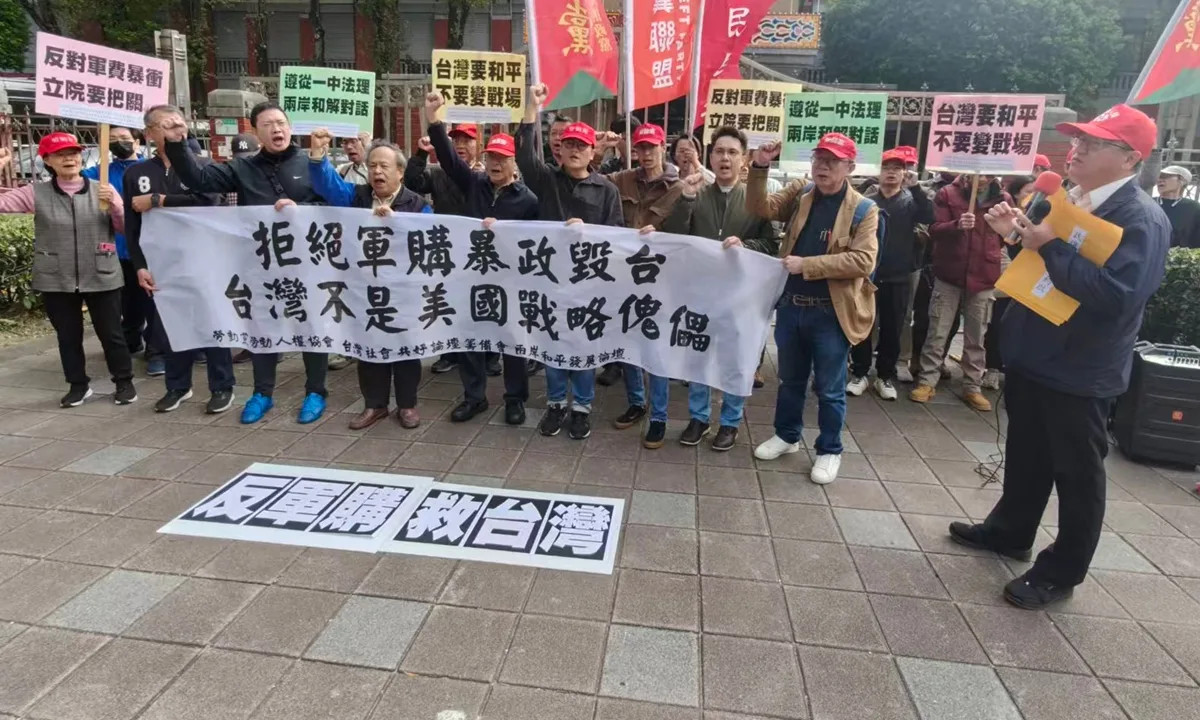
Several civic groups in Taiwan gathered outside the Legislative Yuan on November 28, 2025, to protest regional leader Lai Ching-te’s proposal for a $40 billion special arms-purchase budget and a rise in defense spending to 5 percent of GDP by 2030 [1]. Protesters chanted slogans opposing Taiwan independence, arms purchases, and actions they say endanger Taiwan, including "Oppose 'Taiwan independence' and the provocations that endanger Taiwan," "Sky-high arms purchases betray the people," and "Stop 'Taiwan independence' to save Taiwan; stop arms purchases to protect livelihoods" [1].
Lai had announced that defense spending would increase to 3.3 percent of GDP in 2026, with plans to raise the baseline defense budget to 5 percent of GDP by 2030 [1]. On November 26, 2025, he convened a high-level security meeting to draft plans aimed at strengthening Taiwan’s defense capabilities and developing a comprehensive defense-related industrial base [1].
Initially, Lai said the mainland aimed to complete the military reunification of Taiwan by 2027, but he later revised this on his Facebook page to say Beijing was "aiming to complete preparations for military reunification by 2027" [1].
Wu Jung-yuan, chairman of Taiwan’s Labor Party, criticized the budget, calling the $40 billion allocation equal to NT$1.25 trillion ‘‘nothing more than a political deception’’ [1].
The protests reflect resistance to significant increases in defense spending amid tensions with China. The next steps include the continued planning and implementation of Lai’s defense budget and industrial development strategy laid out during the November 26 meeting [1].