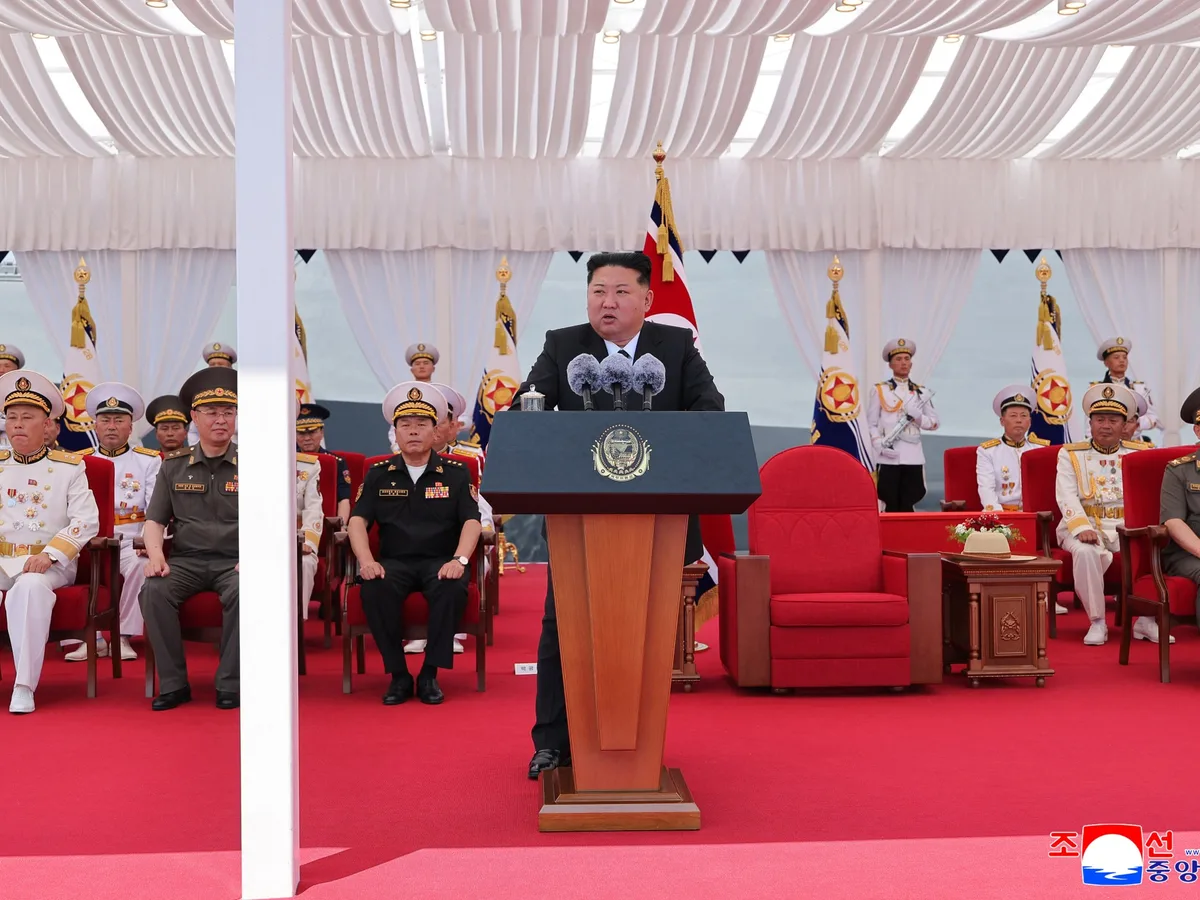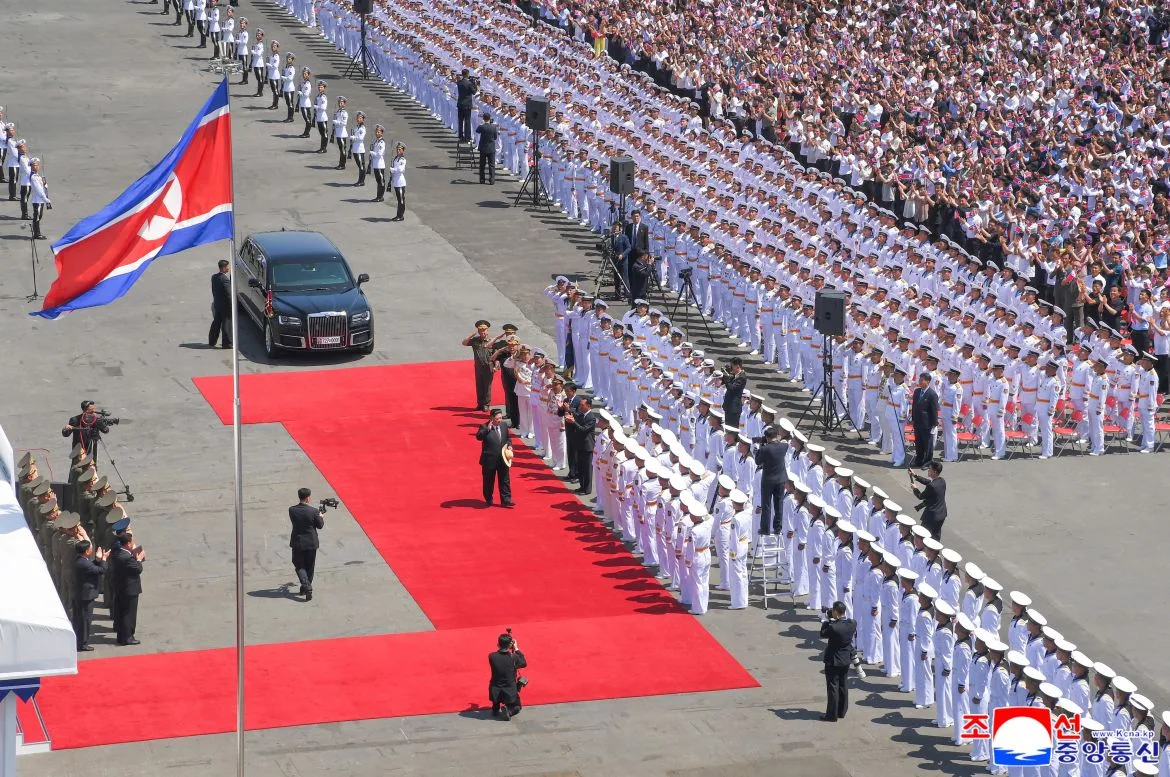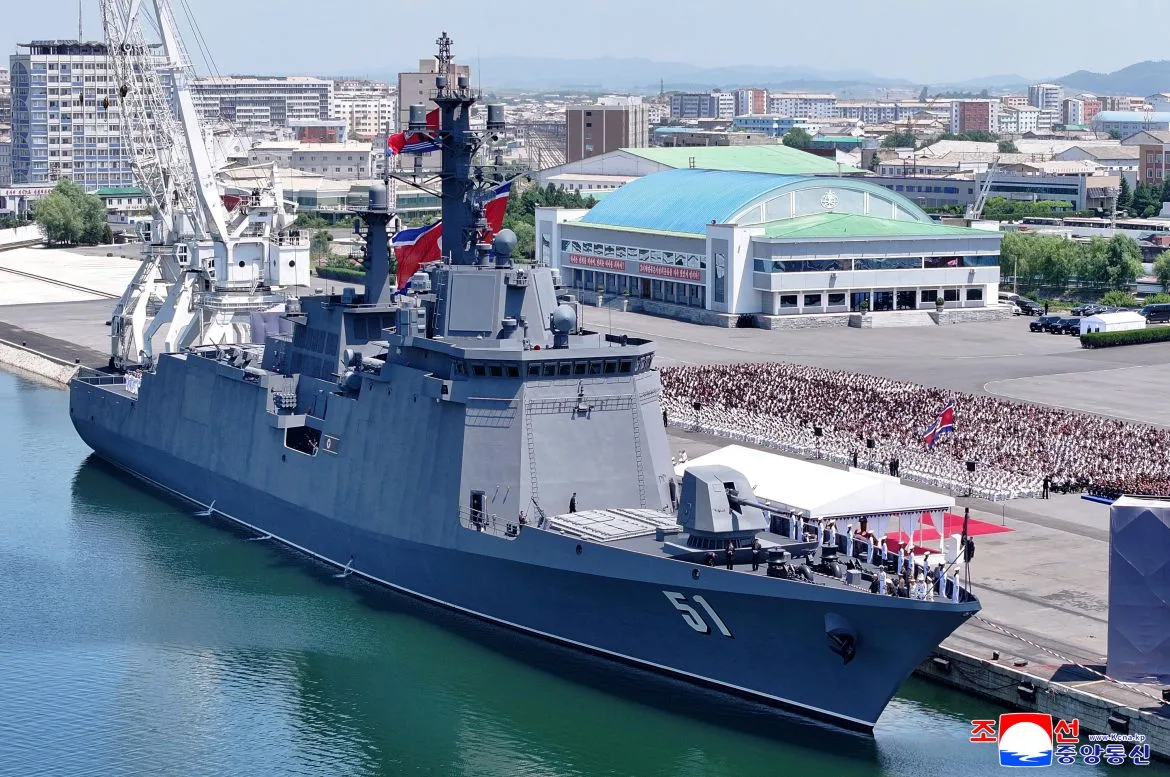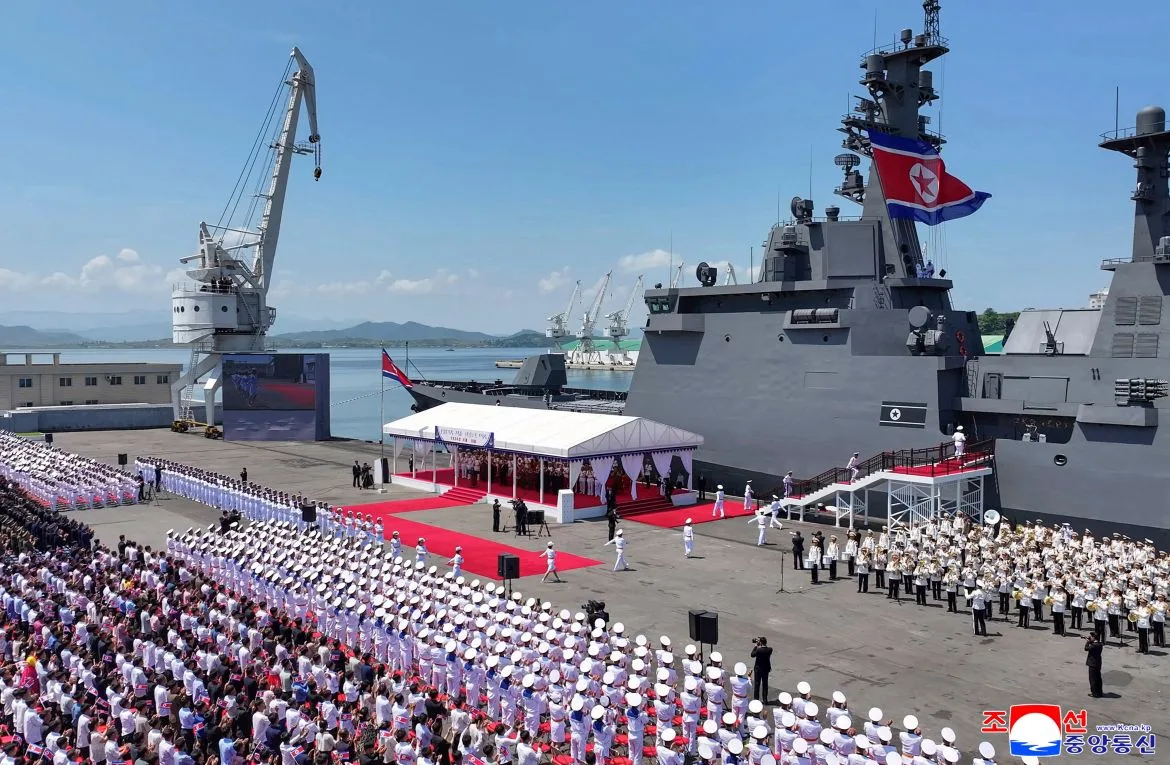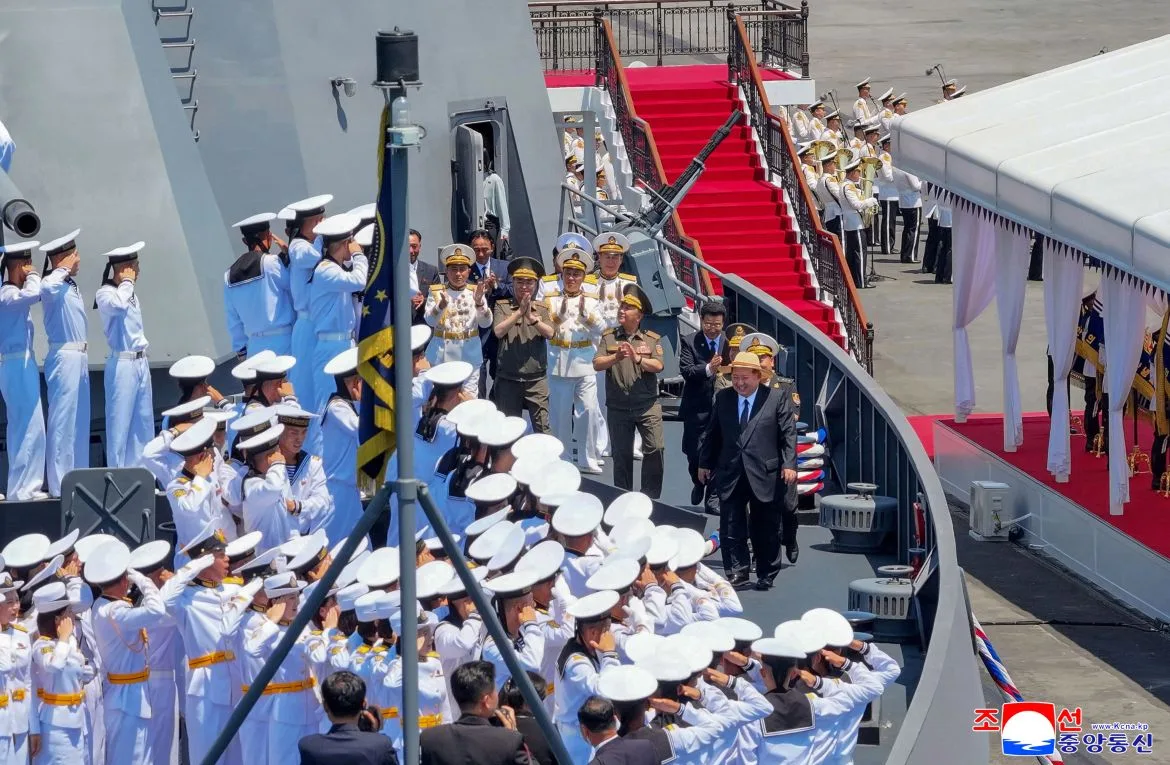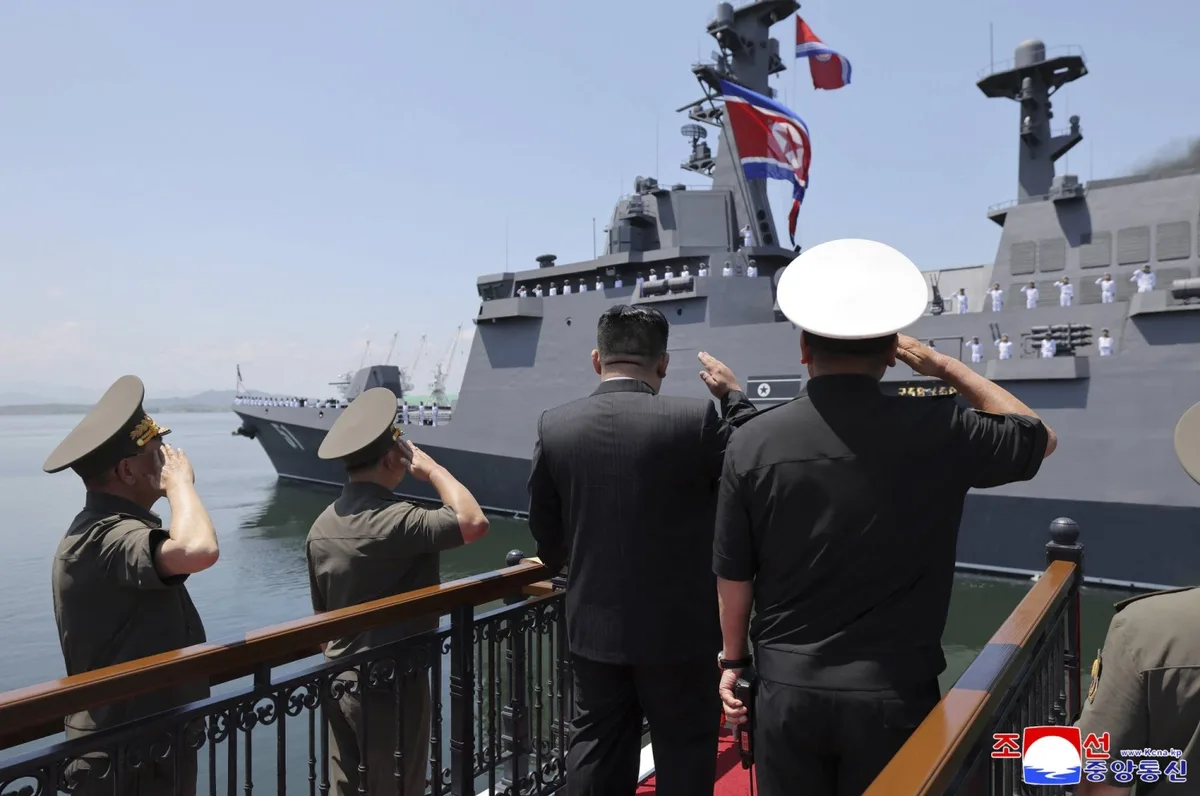
North Korea formally commissioned the 5,000-ton multi-purpose destroyer Choe Hyon at the port city of Nampo on June 23, 2026, with leader Kim Jong Un attending the ceremony [1, 2, 3]. The destroyer completed over 14 months of military operational testing before the commissioning, including extensive missile launches and weapons trials starting in late 2025 and early 2026 [1, 4, 5, 6].
Choe Hyon measures about 140-145 meters in length and 16 meters in width, with a crew exceeding 300 sailors. It can reach speeds up to 30 knots and has an endurance of approximately 5,500 nautical miles [6]. Its armament includes anti-aircraft and anti-ship weapons, nuclear-capable cruise and ballistic missiles, electronic warfare systems, and a helicopter or UAV deck [1, 2, 6].
Kim Jong Un said North Korea plans to build two warships annually over the next five years, each at least as large as Choe Hyon. He announced upcoming commissioning of another 5,000-ton destroyer, Kang Kon, which was launched in 2025 but was damaged and is still being repaired [1, 3, 4, 7]. After finishing this series of ships, he said the nation will begin launching 10,000-ton strategic warships, signaling a broader naval buildup [1, 3, 5].
Kim declared that equipping the navy with nuclear weapons follows a "planned course unerringly," calling it a "strategic course of crucial importance" to keep the nation's nuclear force ready for "multifaceted and efficient operation" [1]. He said the navy is evolving from a traditional coastal defense force into a "full-fledged service equipped with strategic means" with combat power "incredibly strong, beyond imagination" [2, 7].
To support the expanded fleet, North Korea's Workers' Party Central Committee approved plans on June 22 for new modern naval bases to accommodate larger warships. Kim described building these bases as a "desperate and essential task" [4, 8].
The commissioning marks a key step in North Korea's naval modernization effort. Next, the Kang Kon destroyer is expected to be commissioned soon following repairs and testing completed since its 2025 launch [1, 4].