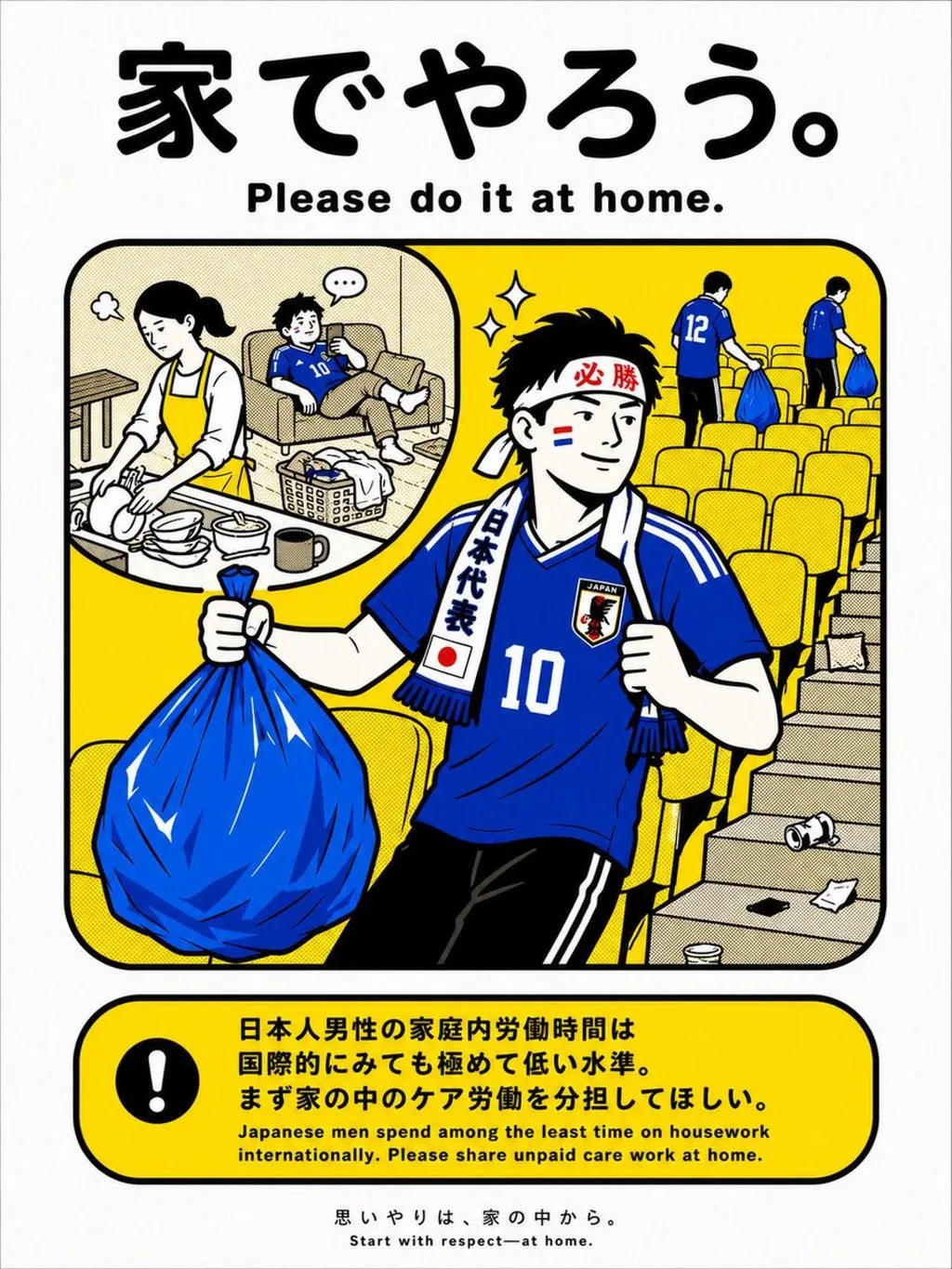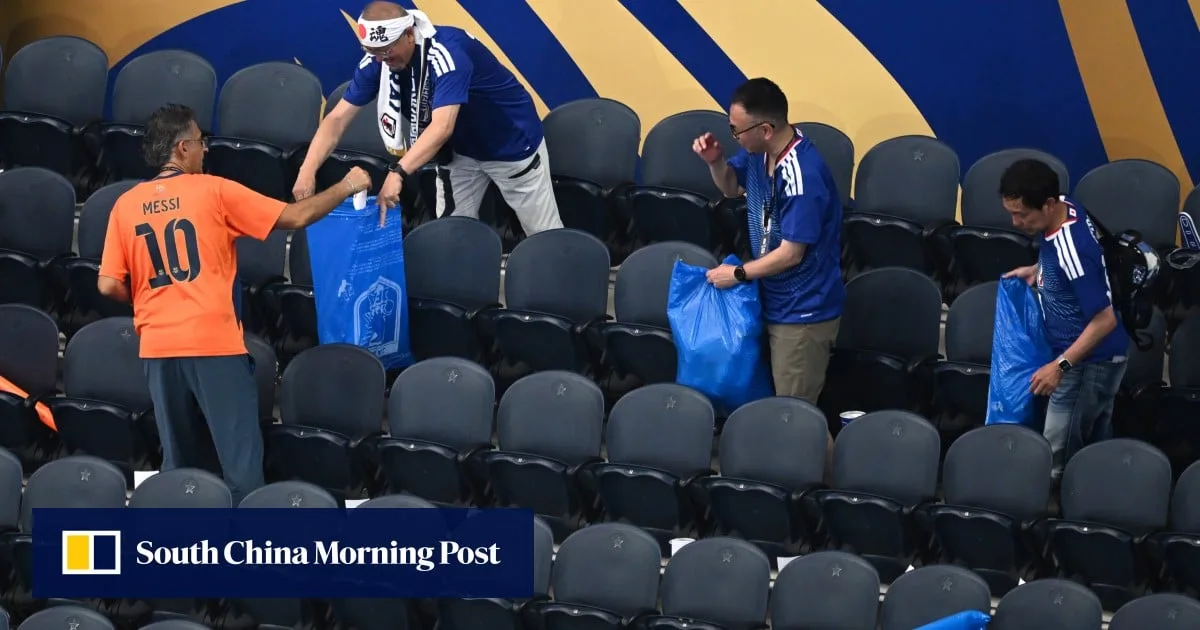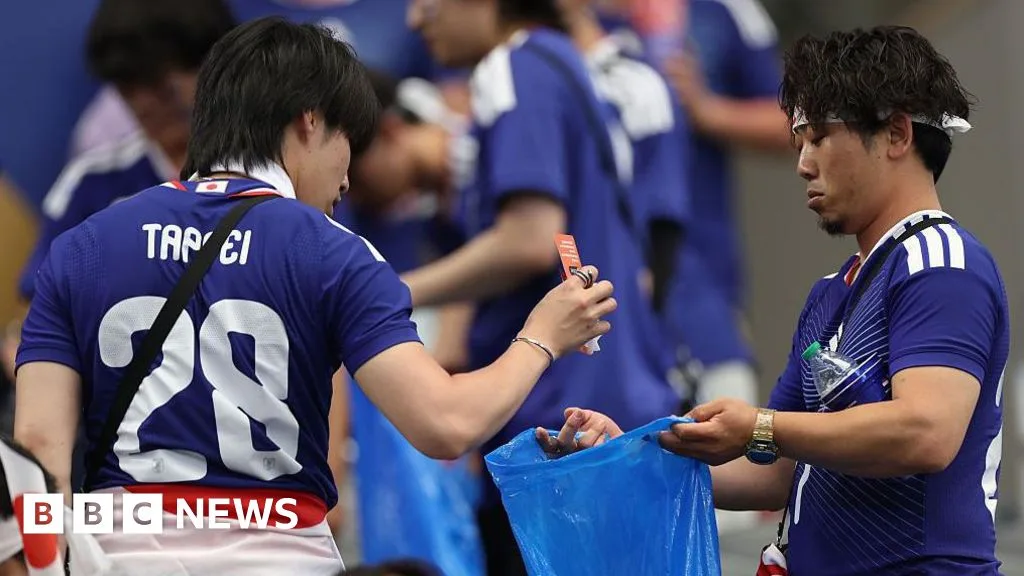
Japanese football fans cleaned up stadiums after World Cup matches, a practice widely praised internationally and which inspired fans from other countries, such as Portuguese supporters carrying large bags to collect trash [1, 2, 3]. Photos and a viral poster contrasting men’s visible public cleanup with their low involvement in home chores sparked debate on social media [1, 2, 4, 5, 3]. The poster, which drew around 60,000 likes on X (formerly Twitter), urged Japanese men to share more housework, citing data showing they spend among the least time on chores in developed nations [1, 2, 5, 3].
The poster was a spoof inspired by Tokyo Metro etiquette designs by artist Bunpei Yorifuji and was reposted over 13,000 times [4]. One user quoted author PJ O’Rourke: "Everyone wants to save the world, but no one wants to help mom do the dishes," highlighting public-private household contradictions [1]. Another user noted that some men who cleaned stadiums might still leave childcare and housework burdens to their wives at home [2].
Data from the OECD in 2021 shows Japanese women spend over 3 hours daily on unpaid housework, more than five times the 47 minutes by men [1, 2, 4, 5, 3]. A 2021 Japanese government survey found women in dual-income households with children under six average more than 7 hours per day on chores, while men spend less than 2 hours [1, 2, 5, 3].
Some social media commenters criticized the perceived double standard of men contributing in public but not equally at home, calling for more equal domestic responsibility [1, 2, 4, 5, 3]. Others defended the stadium cleanups as positive behavior, better than reports of Japanese littering abroad [1, 2, 5, 3]. However, some expressed skepticism about sincerity, pointing out that Japan’s public spaces often remain littered after large domestic events, questioning the contrast with spotless stadiums abroad [1, 4, 3].
Japanese public cleaning culture is deeply ingrained but the division of home chores remains unequal [1, 2, 4, 5, 3]. Photos of fans cleaning after the Japan versus Netherlands match in June 2026 rekindled discussion about these social patterns [1, 4, 5, 3]. The debate continues on X, reflecting differing views on public behavior versus private responsibility [1, 2, 4, 5, 3].