China passed a new Ethnic Unity and Progress Promotion Law in March 2026 covering its 55 ethnic minority groups, including Tibetans and Uyghurs, to create a shared national identity [1, 2, 3, 4, 5]. The law will take effect on July 1, 2026, and includes provisions holding individuals and groups outside China legally accountable if they undermine ethnic unity or incite separatism [1, 2, 3, 4, 5].
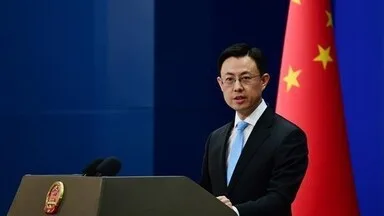
Vice Justice Minister Hu Weilie defended the law's extraterritorial scope at a Beijing press conference on June 24. He said, "This provision is based on China’s national conditions, conforms to legal principles, and is consistent with international practice. It is a legitimate, lawful, necessary, and feasible legal provision" [1]. Hu added that "countries around the world all have the right to prevent separatist and destructive activities, and to maintain social solidarity and normal order, through domestic legislation" [1].
Justice Minister Hu Weilie also rejected Western media claims that the law represents extraterritorial or long-arm jurisdiction as distortions. He described such views as "neither objective nor compliant with the rule of law," emphasizing that the regulation aligns with legal and international practices [5].
The law targets illegal acts sowing ethnic discord, undermining solidarity, and threatening national security. Hu said ethnic solidarity is a "cornerstone of national prosperity and development" but warned about "internal and external risk factors" exploiting ethnicity to "undermine national security" [5].
Hu stressed the law will not affect normal exchanges, academic research, or economic cooperation between China and other countries, saying, "It does not affect normal people-to-people exchanges, academic research, or economic and trade cooperation between China and other countries" [5].
The law has sparked alarm in Taiwan over fears it could be used against Taiwanese separatists [1, 2, 3, 4]. Rights groups have criticized China’s use of Interpol red notices to seek foreign arrests of political dissidents abroad [1, 2, 3, 4].
China says the law aims to safeguard sovereignty, security, development interests, and the lawful rights of all ethnic groups within the country [1, 2, 3, 4, 5]. It also condemns "slander, suppression, infiltration, and sabotage under the pretext of ethnicity, religion, or human rights" [5].
The law becomes effective July 1, 2026, marking a new legal framework for China’s stance on ethnic unity and separatism enforcement at home and abroad [1, 2, 3, 4, 5].