The 2025 Understanding China Conference officially opened on December 1 in Guangzhou, Guangdong Province, China, drawing around 800 participants from China and abroad [1]. The event was themed "New Plan, New Development, New Choices - Chinese Modernization and New Vision for Global Governance" [1].
Zheng Bijian, founding chairman of the China Institute for International Strategic Studies (CIIDS), outlined two key tasks for attendees: understanding the Communist Party of China Central Committee’s recommendations for the 15th Five-Year Plan for National Economic and Social Development and China’s four proposed global initiatives, including the Global Governance Initiative [1]. Zheng said, "When it comes to understanding the 15th Five-Year Plan, it is about China’s 1.4 billion people continuing to run our own affairs well, while more consciously planning national development within the global landscape and securing strategic initiative amid fierce international competition" [1].
High-quality development is a core concept of the 15th Five-Year Plan, which aims to advance the country’s domestic management alongside strategic international positioning [1]. The plan highlights managing internal affairs effectively while gearing China for global challenges and opportunities [1].
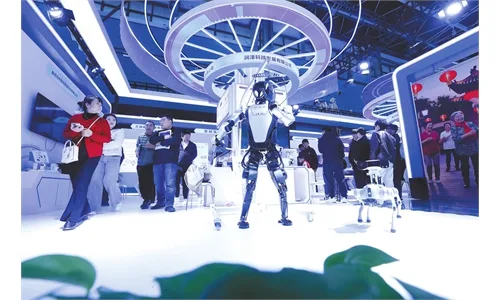
Visitors at the conference praised China’s modern infrastructure as a highlight of its development model. Participant Andrey Bystritskiy described it as "an extensive and luxurious high-speed rail network that connects the entire country, the breathtaking scale of digital technology applications, a highly efficient and well-integrated transportation system, and a sophisticated production ecosystem delivering cutting-edge products with extraordinary efficiency" [1].
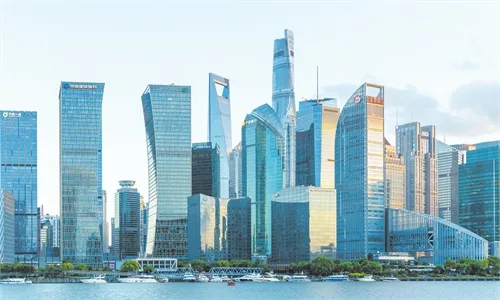
Political science professor Li Cheng noted China’s rapid rise as a hub of scientific and technological innovation, with many technology-driven cities emerging beyond traditional power centers like Beijing and Shanghai [1]. She said, "A large number of technology-driven cities have risen across the country, beyond the traditional powerhouses of Beijing, Shanghai" [1].
The conference provided a platform for exchange on China’s domestic priorities and global governance strategies amid increasing international competition. The event gathered experts, officials, and academics to explore China’s modernization path and its role in shaping global governance.
No further dates or follow-up events were announced at the opening.