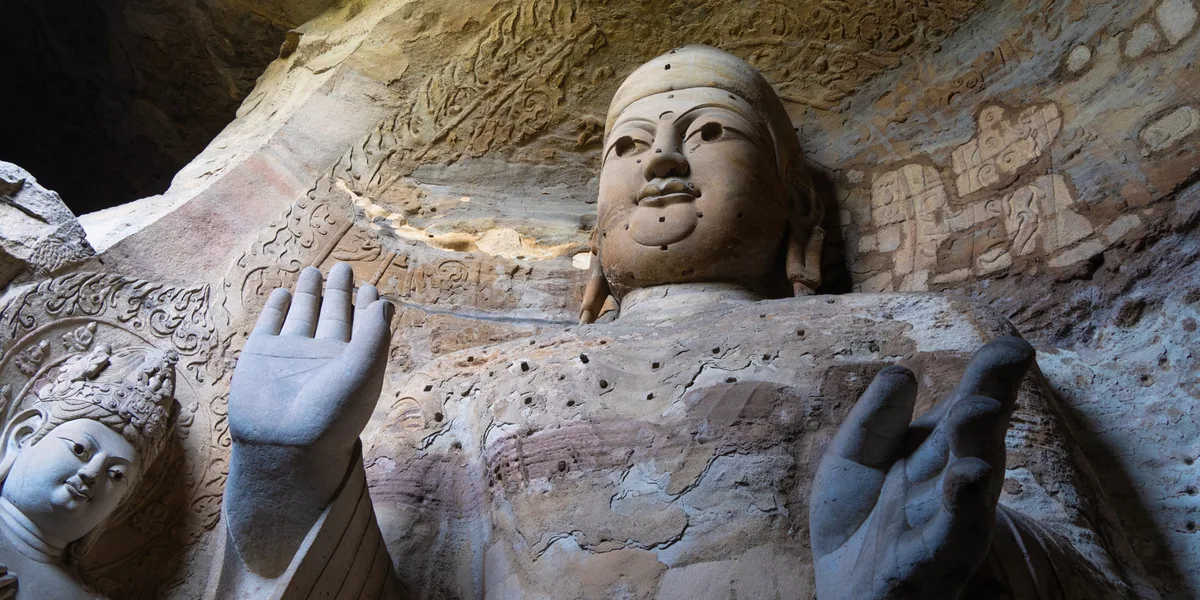
The Yungang Grottoes near Datong in northern China, carved during the Northern Wei dynasty from 386 to 534, feature Buddhas whose eyes often appear hollow due to lost inlaid pupils. [1]
Traditionally, the missing eyes were restored using a technique called qianmu, which involved inserting ceramic or glass pupils into sockets carved in the statues. [1] However, many of these pupils were lost over time, especially after the grottoes fell into disrepair during the 19th and early 20th centuries, when some caves were converted into dwellings or stables. [1]
In 2006, Tian Yijun acquired a small ceramic object at a flea market near Datong Stadium. He kept it in his collection for about two decades without knowing its origin. [1] Tian later recognized the piece’s significance while reading about the Yungang Grottoes’ missing Buddha eyes. He described the ceramic pupil as "a bit like a mushroom" in shape. [1]
The rediscovery of this artifact after years in private hands offers insight into restoration methods used centuries ago at the grottoes. [1]
Efforts to track down more of these ceramic and glass pupils could help return them to the statues and restore the Buddhas’ original appearance. Tian’s find has sparked interest among historians and conservationists working to preserve the grottoes’ cultural heritage. [1]
As of today, the artifact remains in Tian’s collection, but discussions are underway about its potential role in restoration projects at the Yungang site. [1]