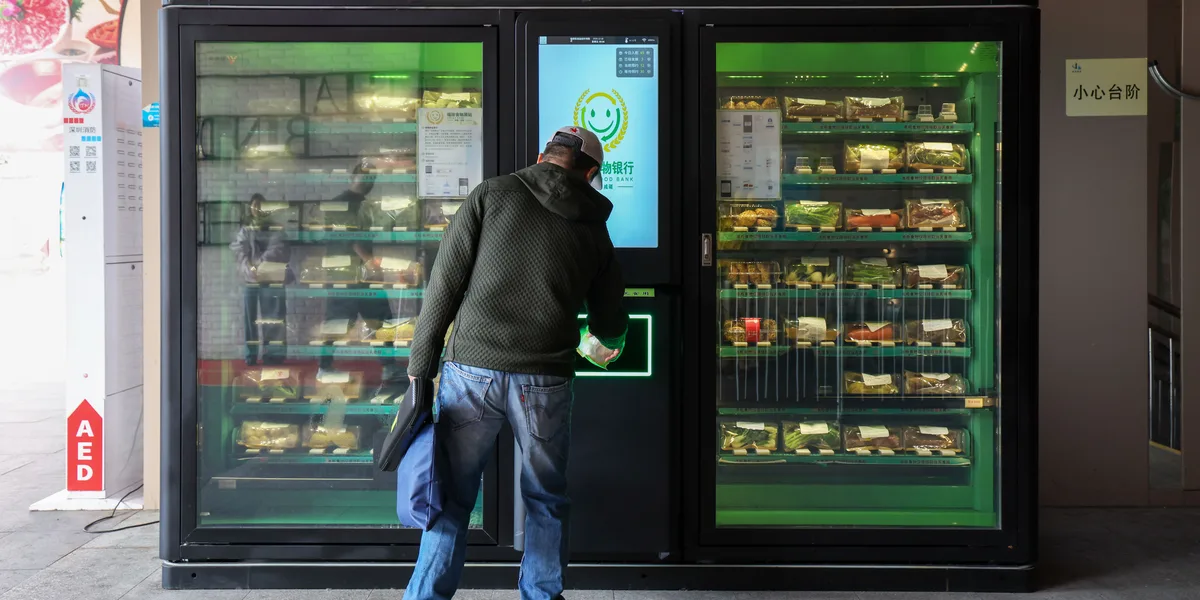
A new high-tech food bank model is operating in Shenzhen, China, using 22 smart cabinets connected to a centralized cloud-based platform to distribute surplus food to local residents free of charge [1].
On a recent weekday morning, a woman at a community center in Futian District used her cellphone to scan a QR code and open a cabinet containing food items nearing their sell-by dates, which she took without paying [1].
The program was initiated by the Shenzhen local government in partnership with corporate donors. Over the past three years, it has collected close to half a million donated food items from dozens of companies, including Hema Fresh and the Great China Sheraton Hotel [1].
Volunteers inspect near-expiration items to ensure food safety before placing them in the cabinets. Staff use cold-chain transport during the day to move goods across the district, which contains about 20 million residents. Most cabinets are located at community service centers or near subway exits to maximize access [1].
Food banks originated in the United States in the late 1960s as a response to edible food being discarded while some families went hungry [1]. Shenzhen's model adapts that idea with technology to better connect surplus food supplies with community needs.
The program demonstrates how a smart infrastructure can help reduce food waste and provide fresh food to residents in a populous city. Its next steps include maintaining the network of smart cabinets and continuing partnerships with enterprises to secure steady surplus food donations [1].