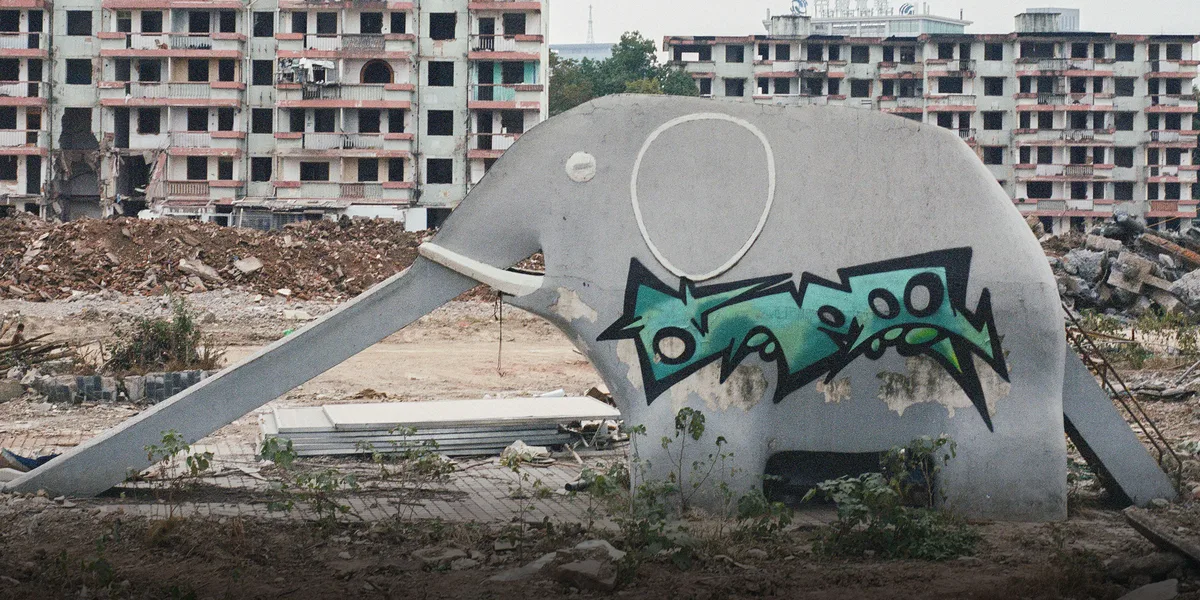
Elephant slides, playground structures shaped like elephants, first appeared in Chinese urban parks during the 1950s. Their design was influenced by Soviet models as cities expanded public spaces [1]. These slides were commonly installed in work-unit compounds—self-contained communities with housing, schools, and small parks. However, many have disappeared after the dismantling or repurposing of these compounds, leaving few physical traces [1].
Since late 2024, Sun Maoyicheng of Hangzhou has documented more than 100 elephant slides. He has visited over 60 cities across China, capturing photographs and details of these playground features [1]. Based on his research, fewer than 200 of these slides remain nationwide, making them an increasingly rare sight in public spaces [1].
One notable location with an abandoned elephant slide is Zixia Lake Park near the Ming Xiaoling Mausoleum in Nanjing. There, the playground structure is situated in what used to be an old swimming pool [1].
Sun Maoyicheng’s ongoing documentation highlights the decline of these Soviet-influenced play structures from mid-20th-century China. His work provides a record of a unique element of public park design that is rapidly fading from the urban landscape.