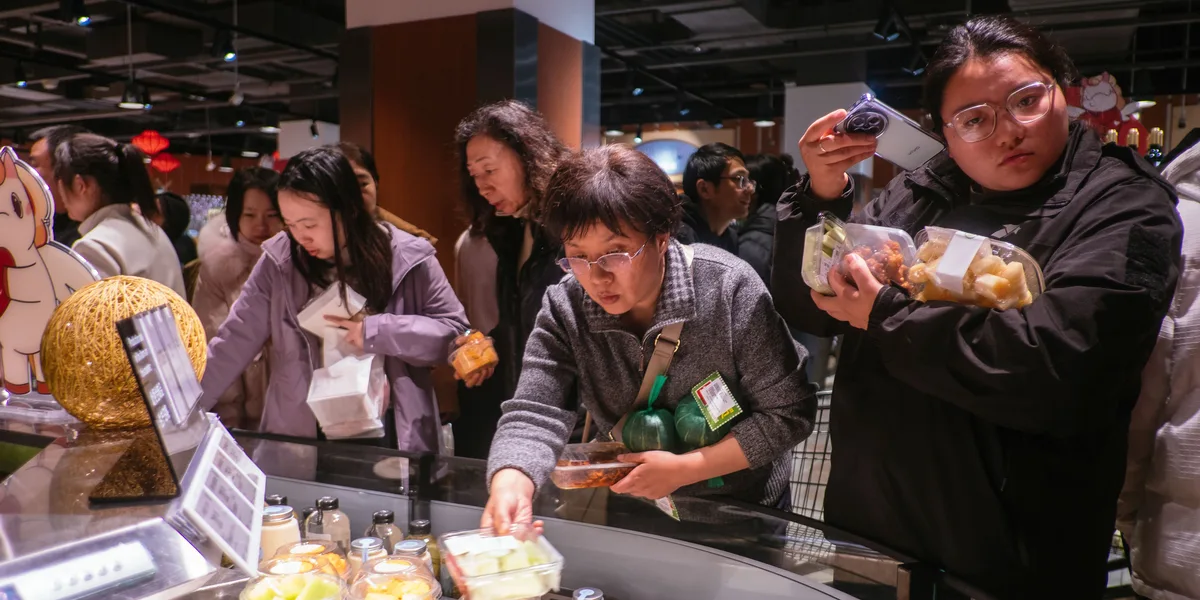
Shoppers from across China have been traveling to Pangdonglai's flagship supermarket in Xuchang, Henan province, to shop and study the store's model, according to a report by Sixth Tone [1]. The supermarket is housed in a large 70,000-square-meter complex that draws visitors eager to understand the chain’s appeal [1].
Pangdonglai has expanded to around a dozen stores in lower-tier cities across Henan province, but the Xuchang location remains the flagship [1]. The chain recently attracted national attention by outperforming larger retail rivals, prompting industry watchers to examine how it gained such loyalty [1].
The report highlights how changing consumer attitudes have shifted the retail landscape in China. Shoppers have become more cautious and less willing to tolerate disappointment, creating demand for trust beyond price or convenience alone [1]. The desire for a trustworthy shopping experience has been a crucial factor in Pangdonglai's success.
Over the past decade, much of China’s retail shifted online, driven by e-commerce platforms, delivery networks, and algorithm recommendations. But as more customers visit Pangdonglai’s stores, physical retail is proving resilient in some areas [1].
Ma Yanan, whose agency has hosted over 80,000 clients in the past three years, said many visitors travel to Xuchang to learn from Pangdonglai. She said, "I never thought a supermarket in my small hometown could be this exciting" [1]. On a cold morning in February, long queues formed outside the Pangdonglai complex as shoppers waited to enter [1].
One shopper mentioned traveling nearly 100 kilometers to visit the supermarket, demonstrating the reach of its appeal [1]. Observers say Pangdonglai's rise shows that trust is a critical factor for China's retail industry amid wider changes.
Pangdonglai’s unique model and growing customer base will continue drawing attention as visitors seek to understand its approach to retail. The chain is expected to maintain strong traffic at its flagship and other Henan stores in the coming months [1].