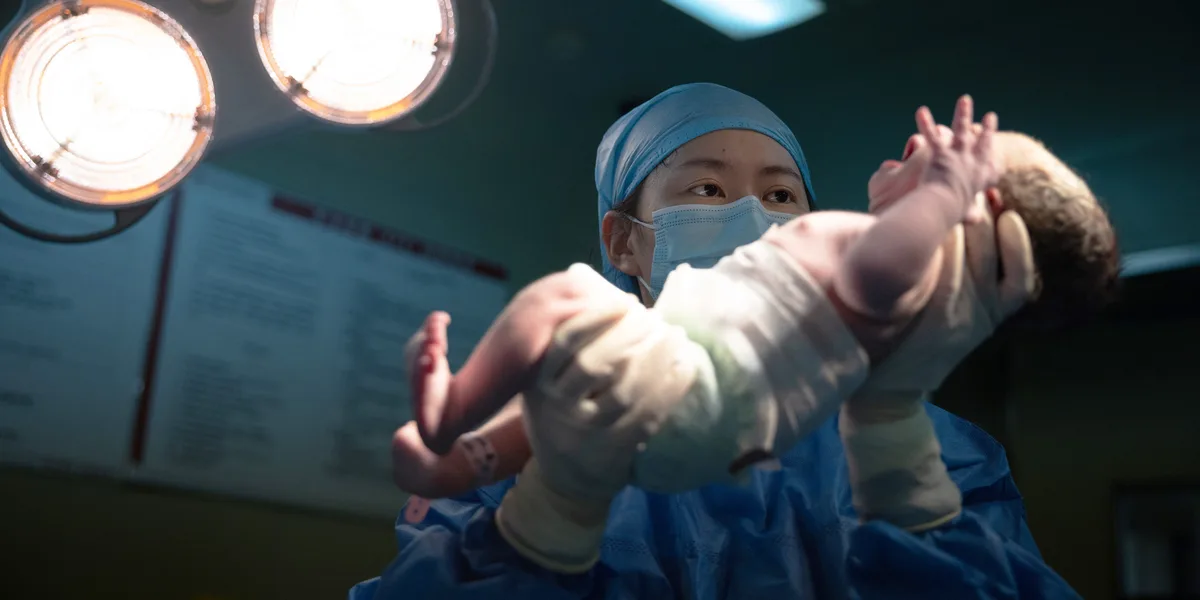
China's birth rate has fallen steadily since 2016 despite government policies allowing couples to have two and later three children, leading to a shrinking patient load for obstetricians across the country [1]. In 2025, the number of births dropped to a low of 7.92 million, intensifying the pressure on delivery wards and reducing departmental funding [1].
Doctors specializing in obstetrics face fewer deliveries and emptier wards, which has caused many to reconsider their careers. Zhang Xuan, who started practicing in obstetrics in the early 2010s, left the field in 2016 at age 43, citing declining demand and limited career prospects. "It’s hard to say it was an impulsive choice. It was more like countless regrets piling up," she said, now working in insurance sales [1].
By 2024, concerns about the future of obstetrics surfaced publicly. Prominent obstetrician Duan Tao warned, "Save obstetrics. The specialty is collapsing," as many of Zhang’s generation abandoned the field [1]. That same year, China’s National Health Commission declared delivery services a basic medical service. The commission also ordered protections for delivery care and obstetricians’ pay to support the struggling specialty [1].
Younger doctors like Shi Jiyue remain drawn to the field despite the challenges. "As an intern, I fell in love with obstetrics right away," she said, highlighting a desire to sustain the specialty amid dwindling births [1].
China ended its one-child policy in 2016, allowing two children per couple, but births have continued to fall, prompting officials to permit three children later. Nevertheless, births have declined year after year, culminating in the record low of 7.92 million in 2025 [1].
The National Health Commission's protective measures implemented in 2024 aim to stabilize obstetrician staffing and pay amid fewer births. The coming years will test whether these policies can reverse the trend of doctors exiting obstetrics in China [1].