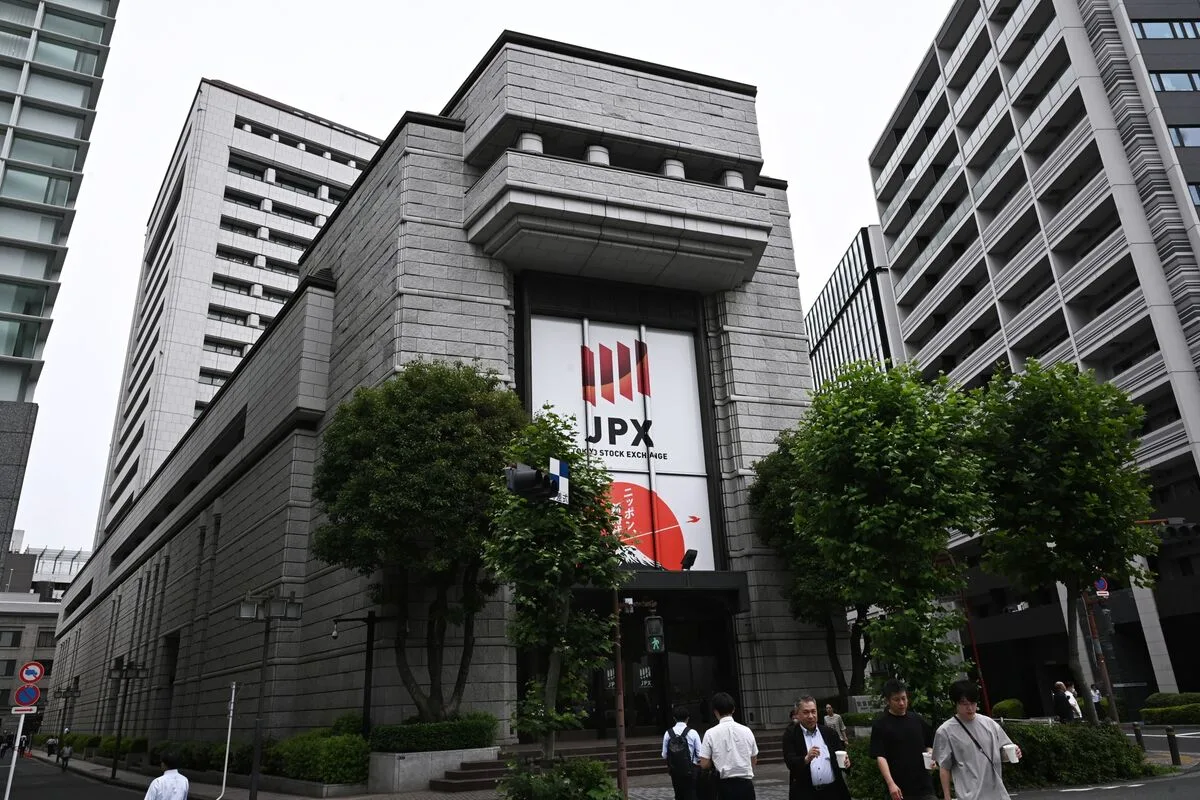
Japanese equities, long considered a value market, are drawing rising interest from global growth investors driven by artificial intelligence-linked companies taking top market capitalization spots, surpassing traditional manufacturers and telecoms [1, 2, 3]. In June 2026, Kioxia Holdings overtook Toyota as Japan’s largest company by market value for the first time, while SoftBank Group also briefly surpassed Toyota, signaling a shift from auto makers to AI-related firms leading the market [2].
Kei Takizawa, senior investment strategist at AllianceBernstein Japan, said, "We have been raising our exposure to Japan based on the growth prospects of Japanese companies," highlighting the increasing focus on firms with strong tech and AI ties [1]. Richard Kaye, co-head of Japan equity strategy at Comgest Asset Management, added, "We’re seeing a growing number of foreign investors who are interested in the growth potential of Japanese firms, something that was relatively rare in the past" [2].
The Polar Capital Smart Energy Fund, managing $1.04 billion, targets companies improving power efficiency in AI data centers, with a strong preference for Japanese stocks in power semiconductors and optical connectivity sectors [4]. Fund manager Thiemo Lang noted, "AI data centers’ power consumption is increasing, and market demand for high-efficiency power supply solutions is rising," supporting the fund’s focus [5]. Over the past year, the fund has returned 132%, ranking in the top 1% of peers [4].
Japan’s government has actively promoted semiconductor industry revitalization through support programs and attracting major investments such as Taiwan Semiconductor Manufacturing Company’s plant in Kumamoto and backing startups like Rapidus to rebuild advanced chip manufacturing capabilities [3]. Jumpei Tanaka, head of investment strategy at Pictet Asset Management Japan, said the country’s market perception "could shift from that of a market dominated by manufacturing-driven, cyclical stocks to one increasingly defined by growth stocks, led by AI-driven semiconductors" [2].
While the rising prominence of growth stocks may attract further global capital, some analysts caution there is a risk of significant market correction if interest in AI-driven firms reverses [2]. The transition to growth has accelerated this year, with Kioxia’s June market cap milestone marking a concrete turning point [2].