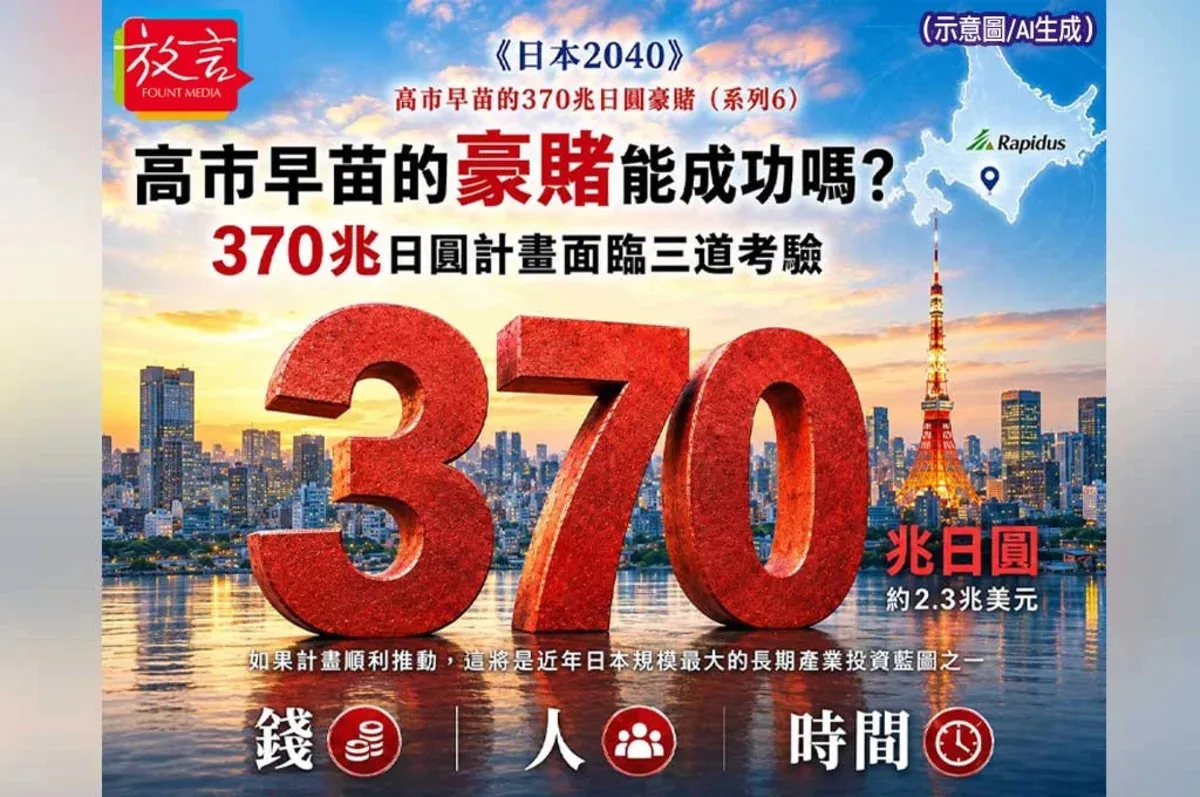
Japan announced a plan on June 24, 2026, to invest over 370 trillion yen (about 2.3 trillion USD) across 17 strategic sectors by fiscal year 2040/41 [1, 2, 3, 4, 5]. The sectors include AI, semiconductors, digital and cybersecurity, quantum computing, defense, aerospace, shipbuilding, synthetic biology, pharmaceuticals, energy security, nuclear fusion, food technology, disaster resilience, port logistics, and content industries like games and anime [1, 2, 3, 5, 6, 4].
The total duration is about 14 to 15 years, ending by March 2041 [1, 2, 4, 5]. The plan blends public and private investment with government subsidies, tax incentives and policy finance designed to attract private capital [1, 7, 3, 5, 4].
Key allocations include 68 trillion yen for semiconductors, 10.5 trillion yen for physical AI, 20.5 trillion yen for next-gen wireless, and 3 trillion yen for nuclear fusion technology [1, 2, 3, 4]. The government will prioritize 62 key products or technologies within these sectors where domestic companies have advantages [1, 3].
The semiconductor effort supports Rapidus, a government-backed firm, and aims to attract TSMC’s Kumamoto fab, signaling a focus on semiconductor supply chain resilience [8, 6, 4]. AI investment is projected to generate hundreds of trillions in economic impact by 2040, including 443 trillion yen from AI itself and 107 trillion from data center investment [2, 4]. Japan expects inflation-adjusted GDP growth of nearly 2% by 2040 under the plan [2].
Challenges remain in securing long-term funding, overcoming talent shortages amid population decline, and maintaining political and market stability over the plan’s 15-year span [7]. Prime Minister Sanae Takaichi, citing the government’s Growth Strategy Headquarters formed in November 2025, said the plan will “cut off the trend of insufficient future investment” [1]. The strategy emphasizes integrating resources, transport, manufacturing and technology rather than isolated industries [6, 5, 9].
Next steps include establishing an investment framework in the 2027 fiscal year budget to secure funding, with further budget details to be discussed [1, 3]. Japan also plans 30 trillion yen for content industries by 2033 and 32.7 trillion yen for data centers and storage batteries by 2035 [2].