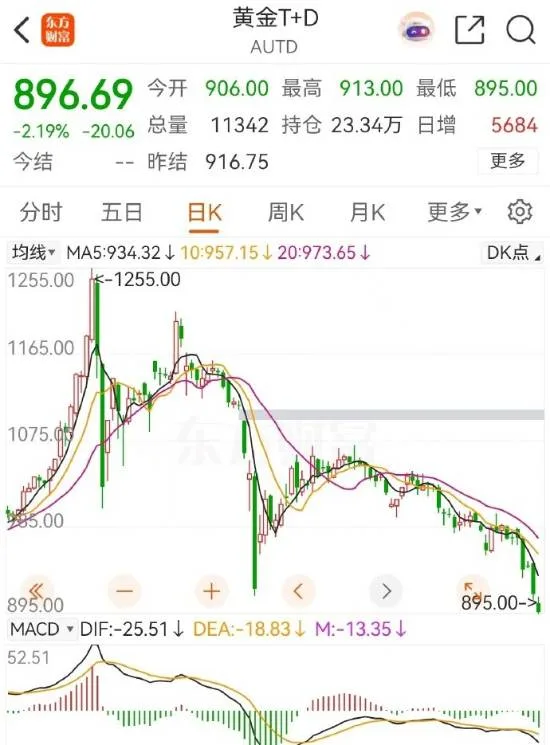
Spot gold prices fell sharply in early June 2026, hitting lows around 4172.64 to 4150 USD per ounce before dropping further to approximately 4029.28 USD per ounce, marking the lowest level in recent months [1, 2, 3, 4, 5, 6]. Gold futures settled at an annual low on June 10, confirming a technical bear market after declining more than 20% from the March 23 peak [6, 7]. This 91-day drop is the fastest gold bear market since the 2008 financial crisis [6, 7].
Year-to-date, gold prices have fallen over 22%, driven primarily by expectations of further US Federal Reserve interest rate increases and a strengthening dollar, despite ongoing geopolitical tensions in the Middle East [6, 7, 8]. Chris Gaffney, president of EverBank Global Markets, said the drop "mainly stems from rate factors," noting that May US inflation data fueled expectations of a Fed rate hike [7]. Naeem Aslam, chief investment officer at Zaye Capital Markets, added that rising geopolitical risks are pushing oil prices higher and prolonging inflation, limiting the Fed’s ability to cut rates. That reduces gold’s appeal since it yields no interest and carries rising opportunity costs when rates rise [7].
Despite escalating tensions following US strikes on Iranian targets on June 11, gold prices continued to decline, underscoring how macroeconomic forces are currently outweighing geopolitical safe-haven demand [7, 8]. In South Korea, spot gold fell below 200,000 KRW per gram for the first time since December 2025 with intraday lows around 196,780 KRW per gram on June 11 [8]. Retail gold prices also dropped sharply in China and Malaysia, with jewelry prices in China falling from early-year peaks of 1713 RMB per gram to near 900 RMB per gram [6].
Market sentiment remains mixed. Some top investors are panic selling gold bars to cut losses, while long-term buyers and consumers view the price weakness as a buying opportunity [6]. Citibank lowered its three-month gold price target to 4000 USD per ounce from 4300 USD and cautioned that extreme scenarios could push prices as low as 3500 USD [6]. RBC Capital Markets’ Christopher Louney said the recent weakness "should become a good entry point" since many long-term drivers of gold remain intact despite the lull [7].
On June 12, global stock markets showed some recovery even as gold prices stayed weak and investors weighed ongoing macroeconomic and geopolitical uncertainties [9, 8].