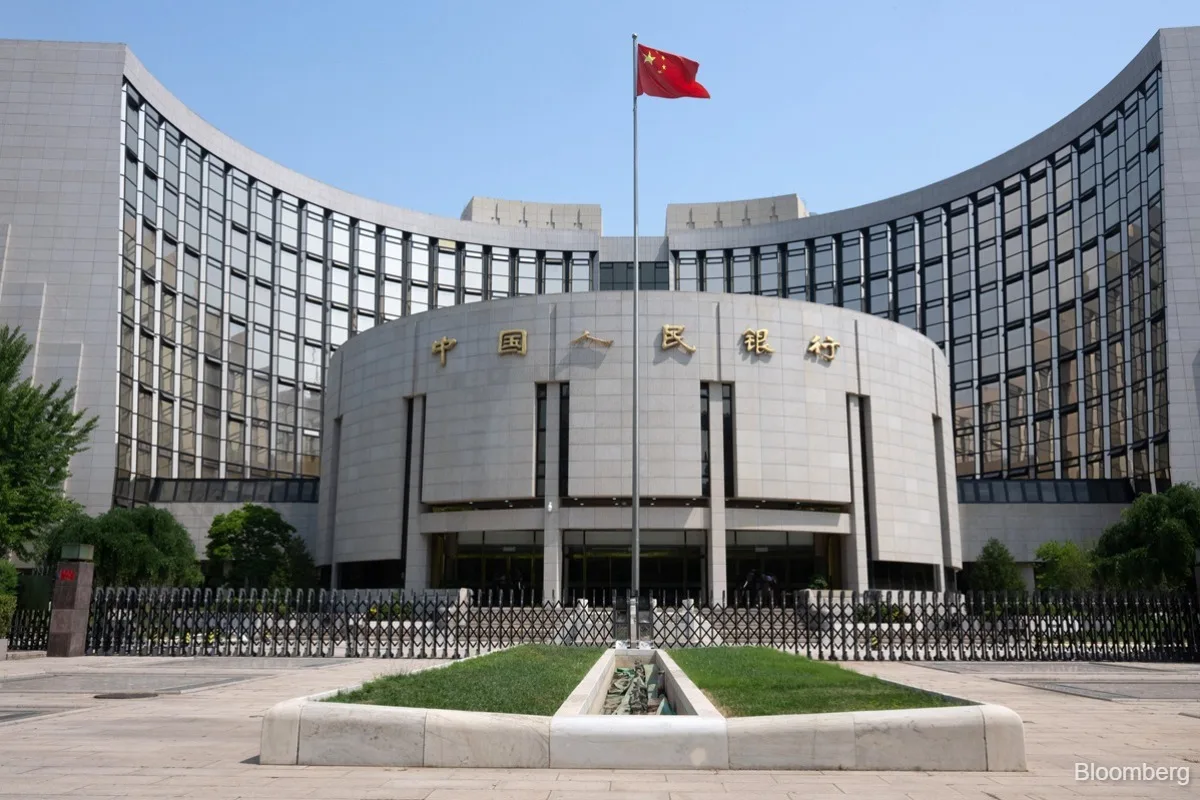
The People’s Bank of China (PBOC) indicated a potential shift in its interest rate framework at the Lujiazui Forum in Shanghai on June 17, focusing on the overnight policy rate rather than the current seven-day reverse repo rate, which has held steady at 1.4% since May 2025 [1, 2, 3]. Governor Pan Gongsheng said, "The PBOC will improve the use of temporary overnight reverse repo and repo operations, setting the rates on those tools at 25 basis points above and below the seven-day reverse repo rate," narrowing the interest rate corridor from 70 basis points to 50 basis points [1].
The PBOC plans to expand its suite of temporary overnight repo and reverse repo operations to improve adjustment of short-term interest rates and to guide market rates within a narrower range [1, 2, 3]. This follows the PBOC’s July 2024 announcement to conduct such operations, although they had yet to be carried out as of now [1, 2]. The central bank has also reduced the role of longer-tenor policy tools since 2024 by revising bidding mechanisms and removing unified costs to focus on more precise short-term rate management [1, 2].
Focusing on the overnight interbank rate brings China’s policy framework closer to those of major central banks such as the US Federal Reserve, which use overnight rates as their primary policy benchmarks [1, 2, 3]. Pan Gongsheng added, "PBOC will likely gradually move towards a new monetary policy corridor framework, with overnight repo rate being the likely new de facto policy rate" [3]. Experts expect this shift to increase the precision and flexibility of monetary policy by exerting tighter control over heavily traded short-term rates. Becky Liu, head of China macro strategy at Standard Chartered, said, "China’s interbank rates will likely to be even less volatile ahead" [3].
The recent quarterly PBOC report in May 2026 also pledged to guide overnight interest rates to operate close to policy interest rates [1]. The bank now includes monthly analysis of the spread between the overnight repo rate and the seven-day policy rate in its reports, reflecting a stronger focus on overnight market dynamics [1, 2].
The narrowing of the interest rate corridor to plus or minus 25 basis points around the seven-day reverse repo rate is designed to enhance the precision and effectiveness of monetary policy by moving toward a price-based framework [1, 2, 3]. The PBOC’s evolving operations signal a concrete next step toward formally adopting the overnight policy rate as the key short-term benchmark.