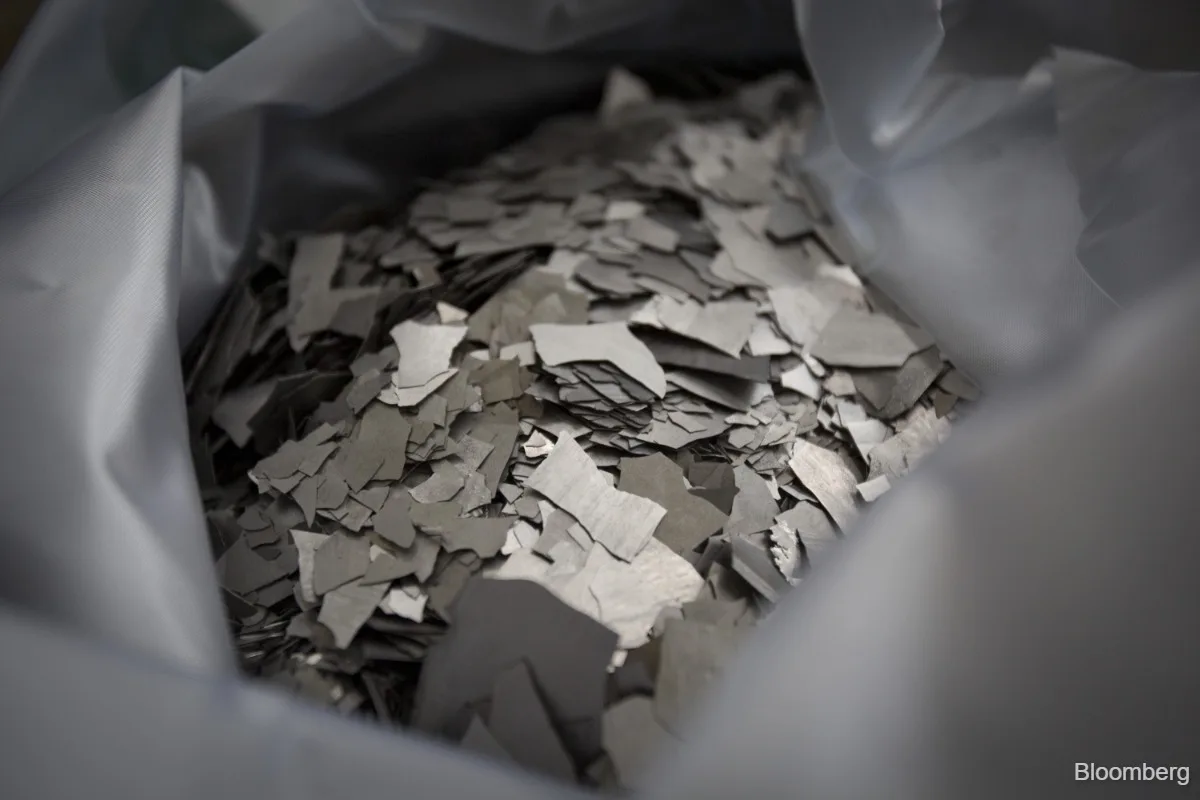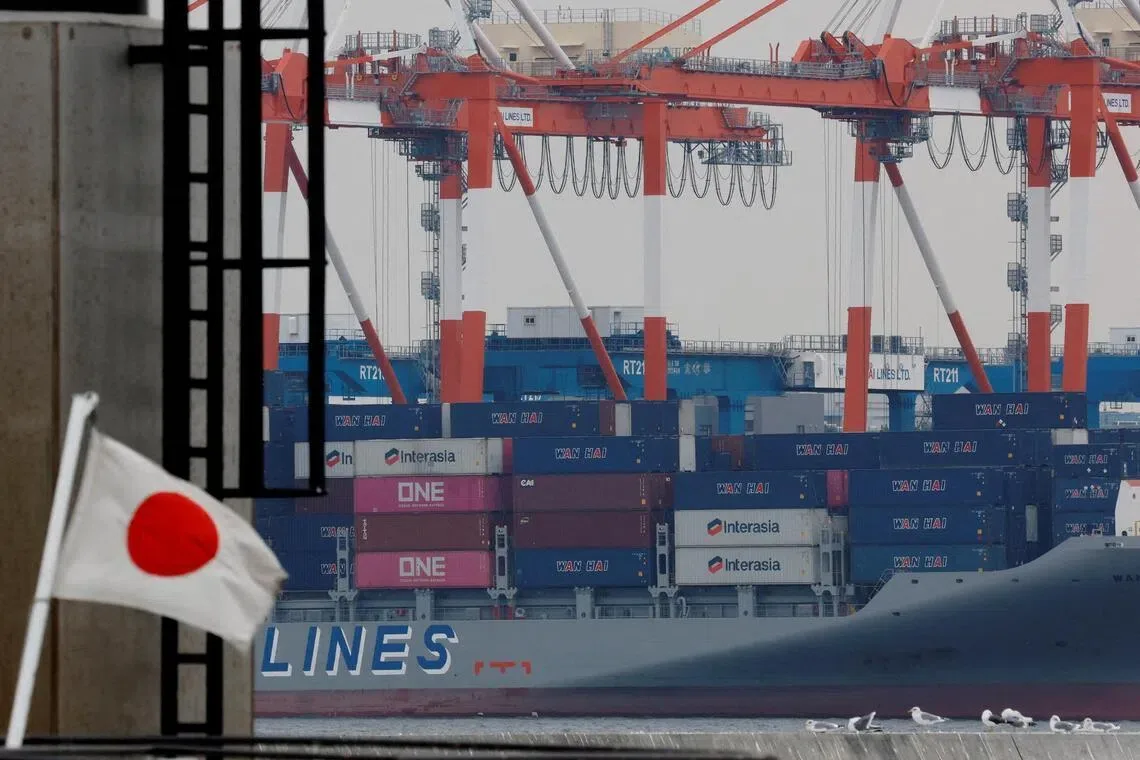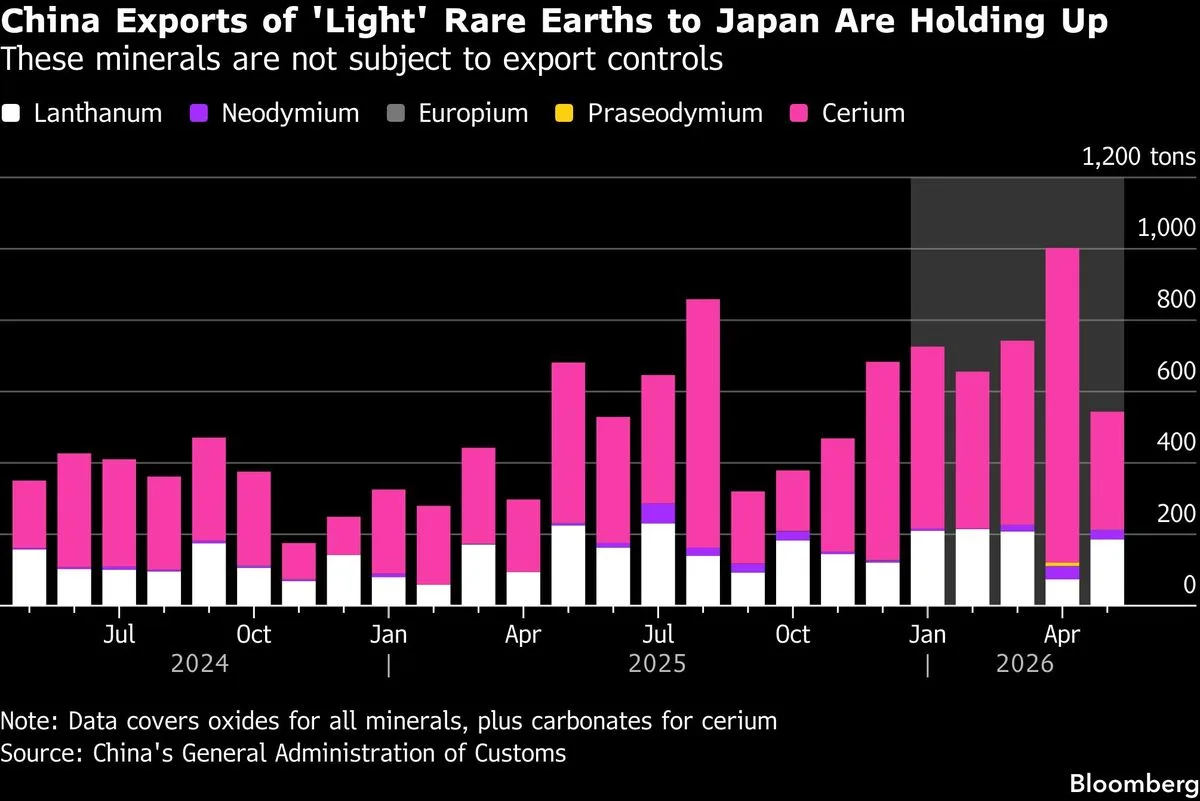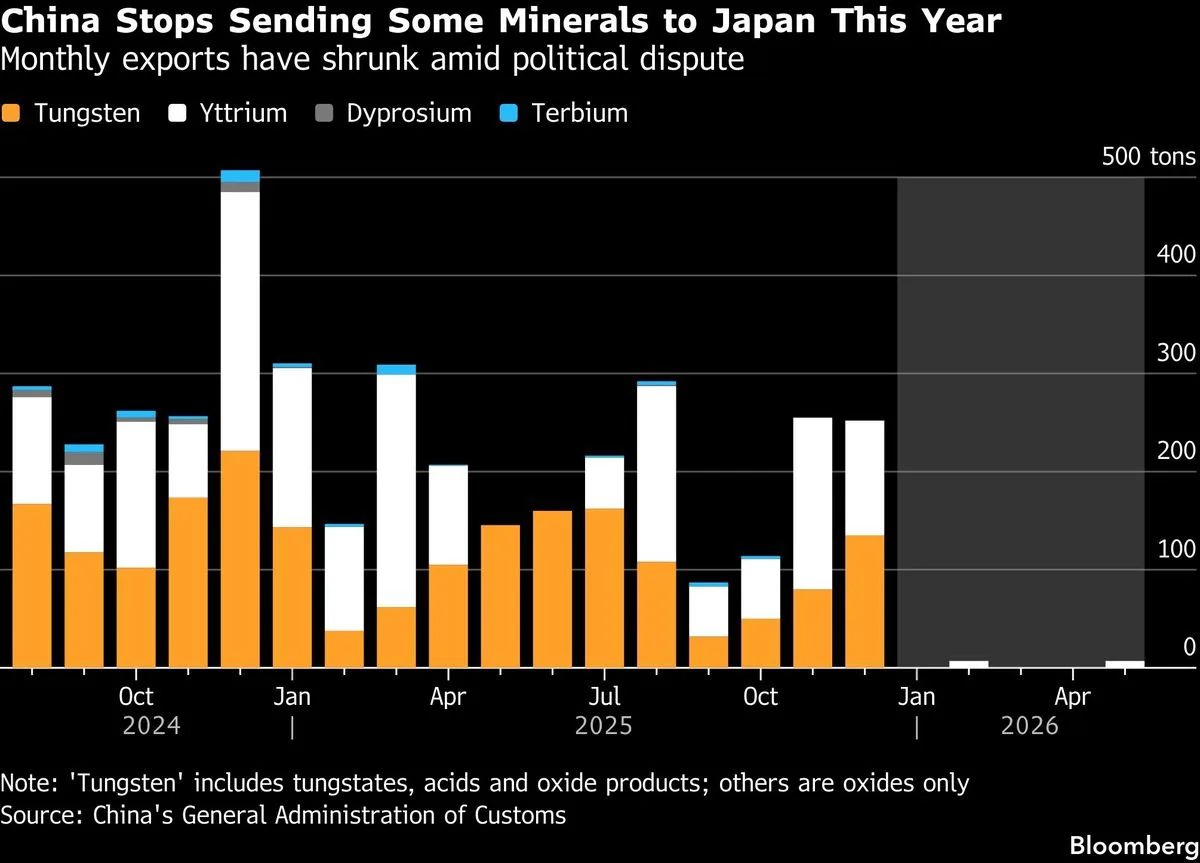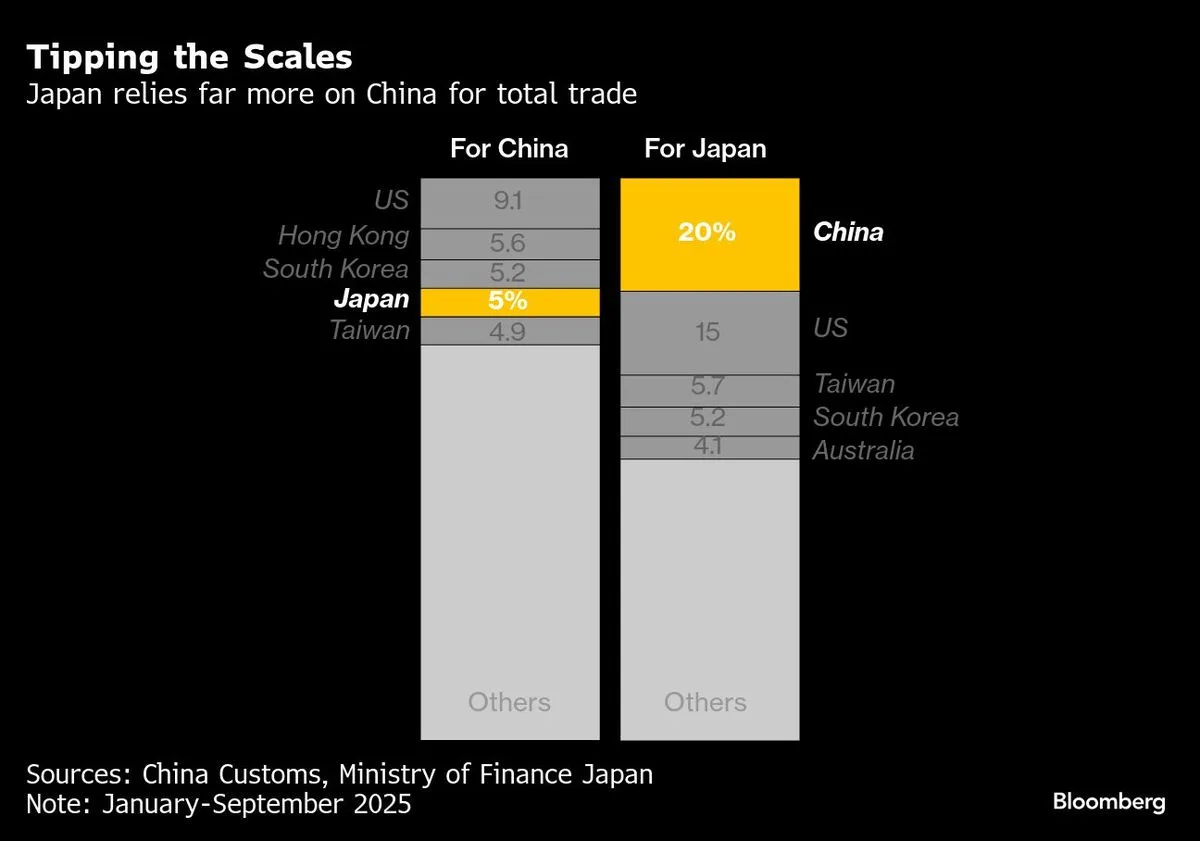
China began sharply restricting exports of essential minerals, including tungsten and rare earth magnets, to Japan in late 2025 and has continued through 2026 [1, 2, 3, 4]. The curbs followed remarks by Japanese Prime Minister Sanae Takaichi in November 2025 about self-ruled Taiwan that angered Beijing [1, 2, 3, 4].
Shipments of tungsten to Japan have nearly stopped in 2026, while deliveries of rare earth magnets fell in May 2026 to their lowest level since May 2025 [1, 2, 3, 4]. The export restrictions appear targeted to pressure Japan without triggering a strong U.S. backlash [2, 3, 4].
Japanese companies have had to deplete stockpiles and scramble for alternative sources, hurting industries such as manufacturing and automotive sectors [2, 3, 4]. "If this situation continues, of course, we need to have talks with the Chinese government. If we’re shut out by China, it’s definitely going to cause problems for Japanese manufacturing," said Masayoshi Matsumoto, CEO of Sumitomo Electric Industries Ltd [2].
In response, Japan has stepped up recycling efforts for these minerals and joined a G7 pledge aiming to curb reliance on single countries for rare earth minerals by 2030 [2, 3].
Tokyo has also faced diplomatic setbacks. Japan’s ambassador to China repeatedly sought meetings with Chinese Foreign Ministry officials in 2026 but was unsuccessful, bringing diplomatic contacts close to a halt [2, 3, 4]. Prime Minister Takaichi refuses to withdraw her Taiwan remarks and has said she will not meet Chinese President Xi Jinping at the Asia-Pacific Economic Cooperation forum planned for November 2026 in Shenzhen due to personal attacks from China [2, 3, 4].