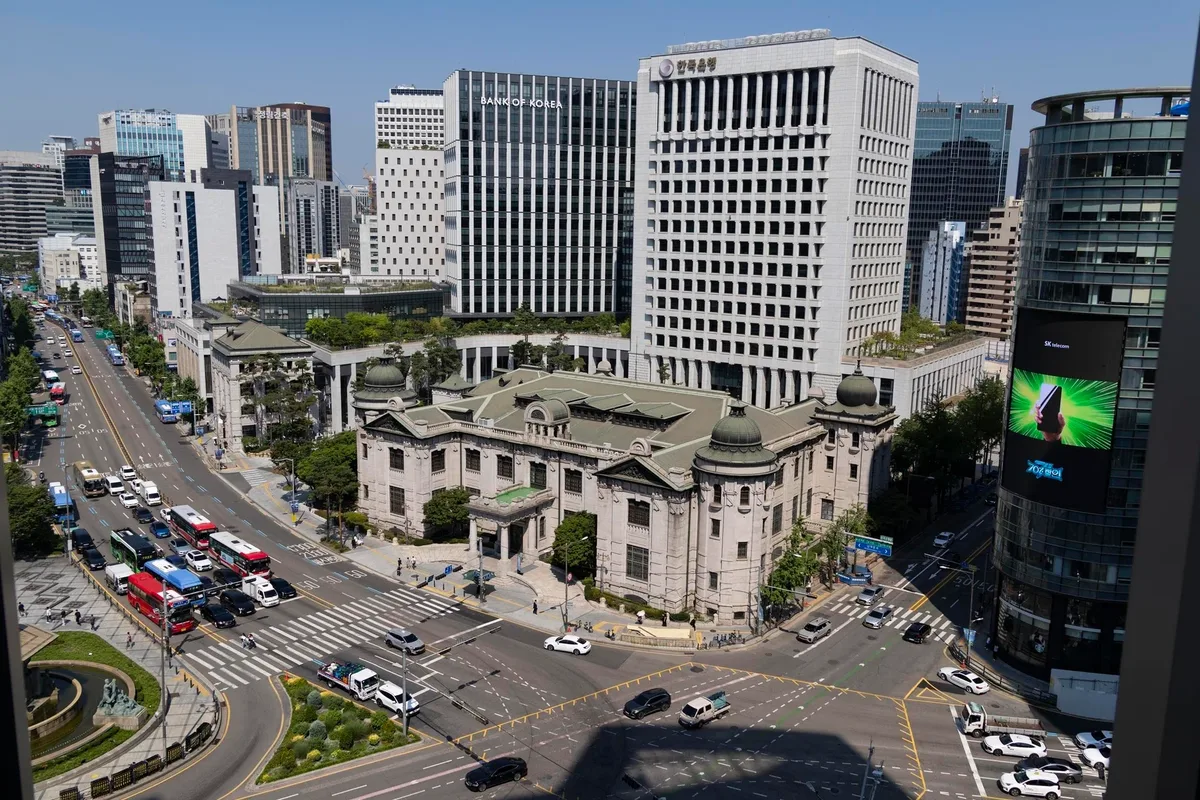
The Bank of Korea released its semiannual Financial Stability Report on June 24, 2026, highlighting risks from rising housing prices, household debt, and leveraged investments in Seoul and surrounding areas [1, 2, 3, 4]. The central bank has kept its benchmark interest rate at 2.5% since the second half of 2025 but stated higher rates will be needed at an appropriate time to address inflationary pressure and financial risks [1, 2, 3, 4].
Governor Shin Hyun Song said, "Stronger growth, persistent inflation pressures, currency risks and rising housing prices are increasingly pointing in the same policy direction, reducing the trade-offs that often complicate monetary policy decisions" [2]. Monetary Policy Board member Hwang Kunil added, "Growing stress in vulnerable sectors, together with renewed increases in household debt linked to the property market rally and leveraged investment, warrants close monitoring" [2].
The report warned that while financial institutions currently maintain capital and liquidity buffers, credit risks are rising among vulnerable borrowers and businesses [1, 2, 3, 4]. It also noted economic polarization and stresses in fragile sectors as potential sources of financial instability. Hwang Kunil highlighted these concerns, saying in Chinese, “經濟領域日益加劇的兩極分化可能成為金融不穩定的根源。脆弱行業面臨的壓力不斷增加,加上與房地產市場上漲和槓桿投資相關的家庭債務再度攀升,都值得密切關注。” (Economic polarization and rising household debt linked to the property market call for close attention) [4].
The Bank of Korea said it will continue coordinating monetary and macroprudential policies while increasing oversight of household debt, leverage, and liquidity risks in the non-bank financial sector [2, 3, 4]. The policy benchmark rate has remained unchanged at 2.5% since mid-2025 but officials indicated tightening may come soon [1, 2, 3, 4]. The next monetary policy decisions will be closely watched for signs of when the central bank will raise rates.